Everyone thinks this is a big win for investors.
But the story isn't that simple.
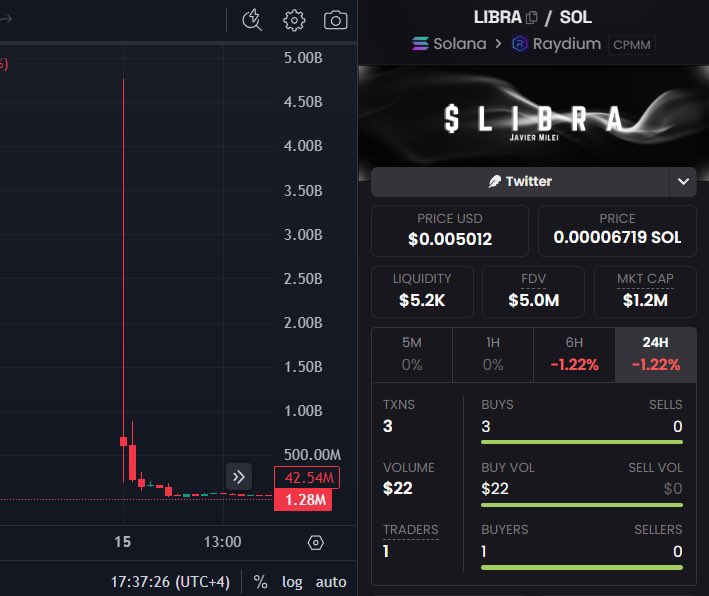
A judge in Argentina has ordered Binance, Bybit, OKX, and Bitfinex to share the identity of 25 wallets linked to the LIBRA token that President Javier Milei promoted.
The judge wants KYC details, IP addresses, and the full transaction history of those wallets.
But here's the problem.
This is only a request for information. It does not freeze the funds.
By the time the order was issued, the money had already moved.
On May 10, about $498,539 USDT was bridged to Tron and split into 17 separate transactions to make tracking harder.
At least 10 of those transfers still passed through Binance.
The blockchain recorded every step.
Everyone can see where the money went.
But seeing the transactions and recovering the money are two very different things.
So far, no funds have been frozen.
Another important detail is that Argentina's Anti-Corruption Agency cleared Milei.
The investigation is now focused on the people who created the token and moved the funds, not the person who promoted it.
This case shows both the strength and the weakness of crypto.
The blockchain gives a complete record of every transaction.
But even when everyone can see where the money went, getting it back is a completely different challenge.