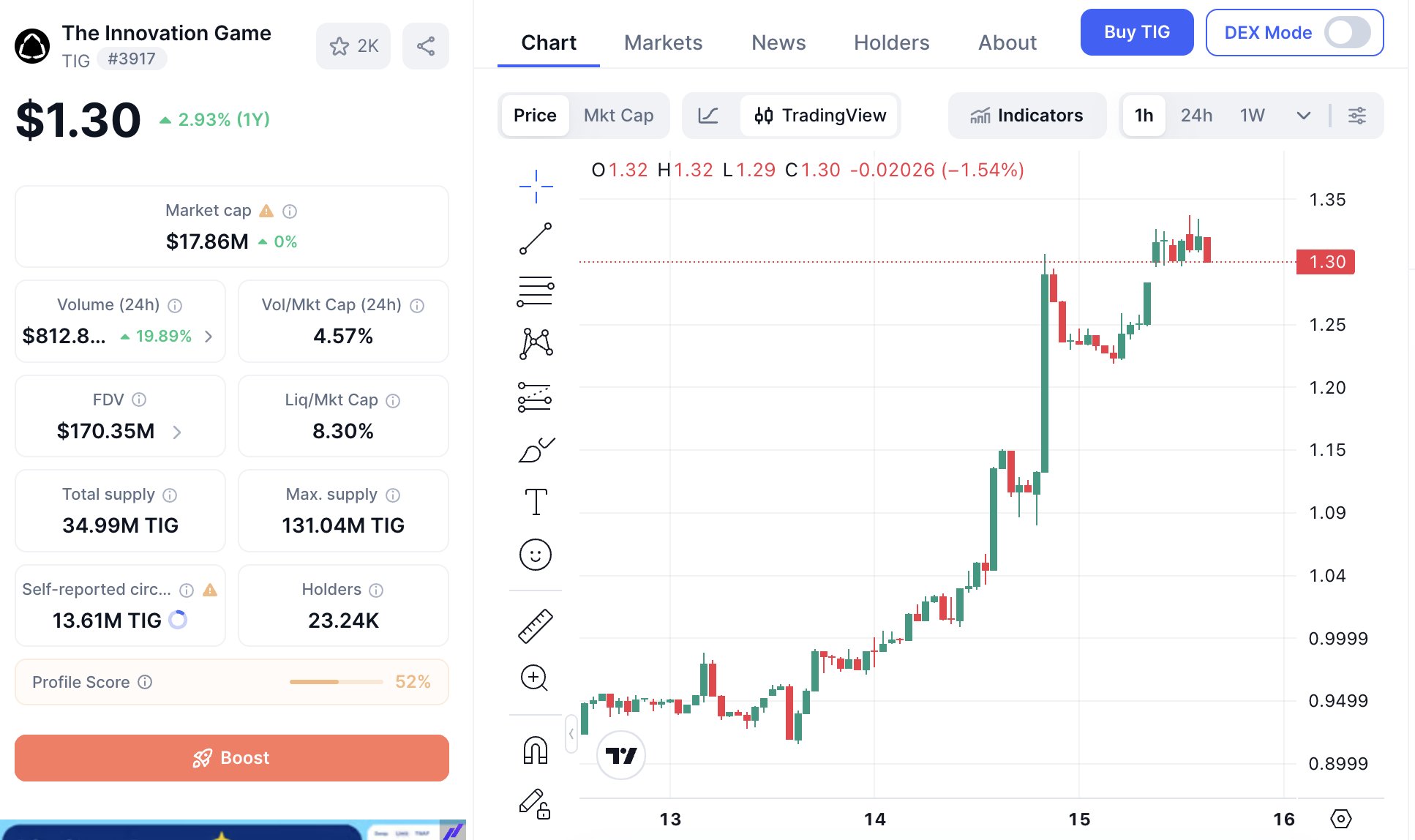
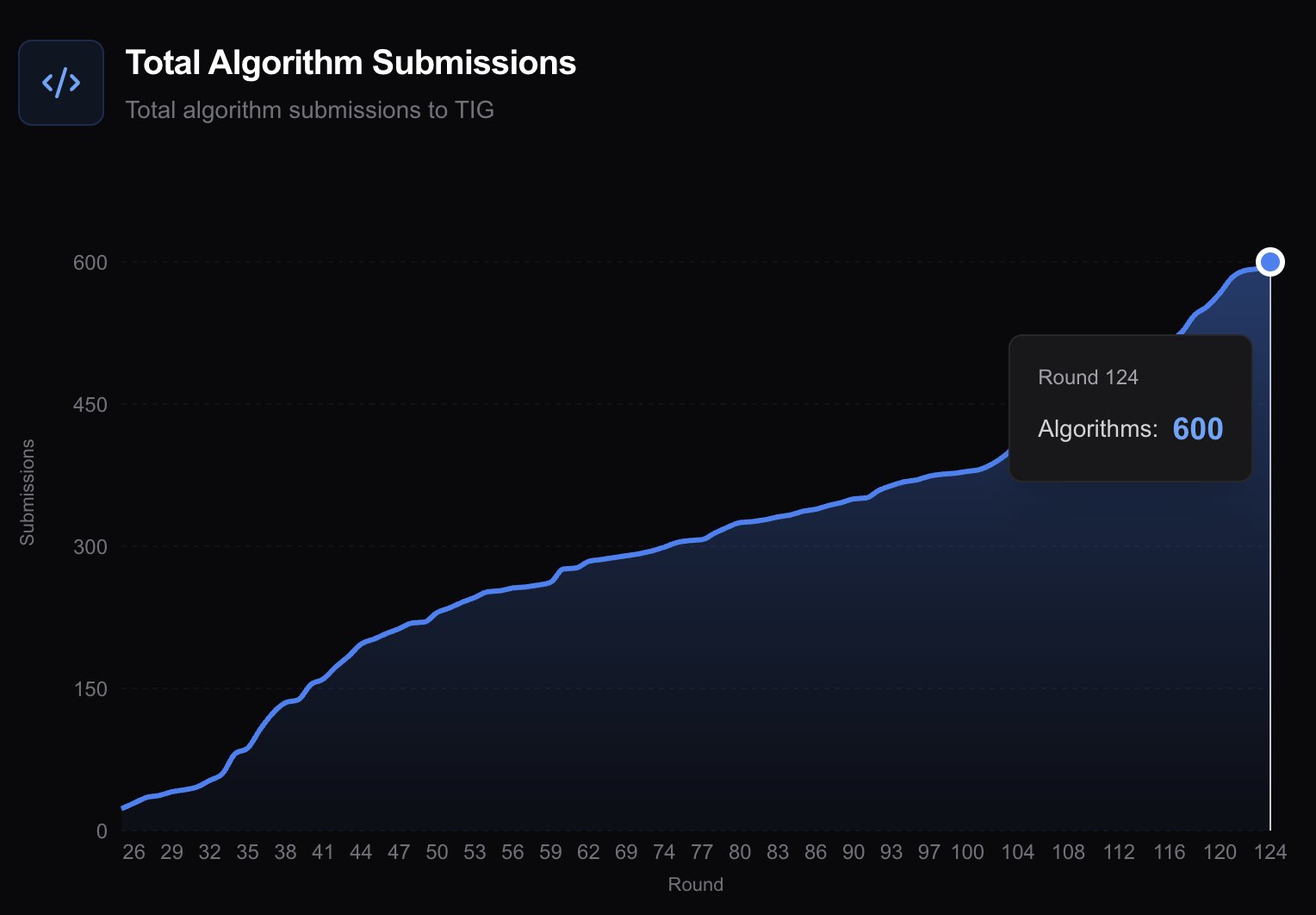
TIG is up 30% due to the licensing explainer, and algorithm submissions have reached 600, showing strong growth.
TIG is up 30% in a few days on the licensing explainer and the market is starting to connect the dots
@tigfoundation matters because it turns crowdsourced algorithm discovery into licensable IP, with companies paying in TIG to use the best algorithms privately
There are now 600 algo submissions, with growth accelerating sharply in recent rounds
Companies can license that growing pool of IP (algos) & pay in base:0x0c03ce270b4826ec62e7dd007f0b716068639f7b while keeping their own data and implementation private
I'll link an article below to read more to help you understand why you should pay attention
Algorithms are all you need
@tigfoundation Article referenced:
Also screenshot of number of algos hitting 600 as per @tigstats
https://t.co/XfcUSZ1d7B https://t.co/YaeYPSZGux
@tigfoundation @tigstats Good explainer here:
https://t.co/xQXGLklEuw