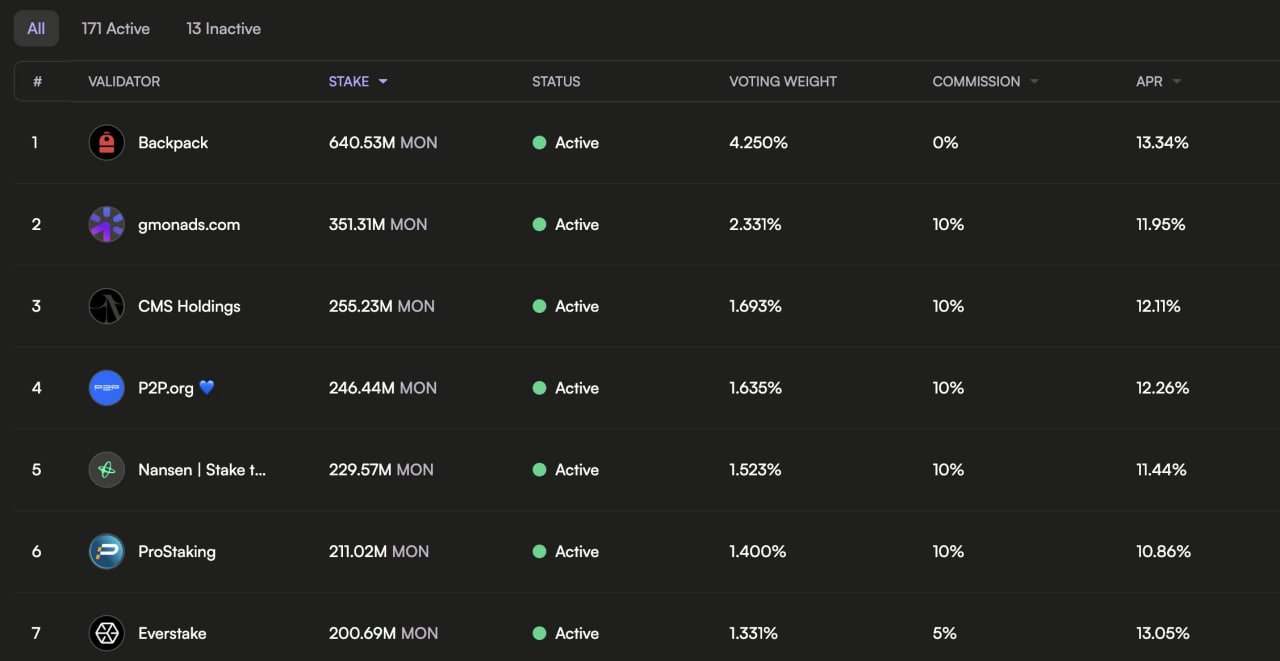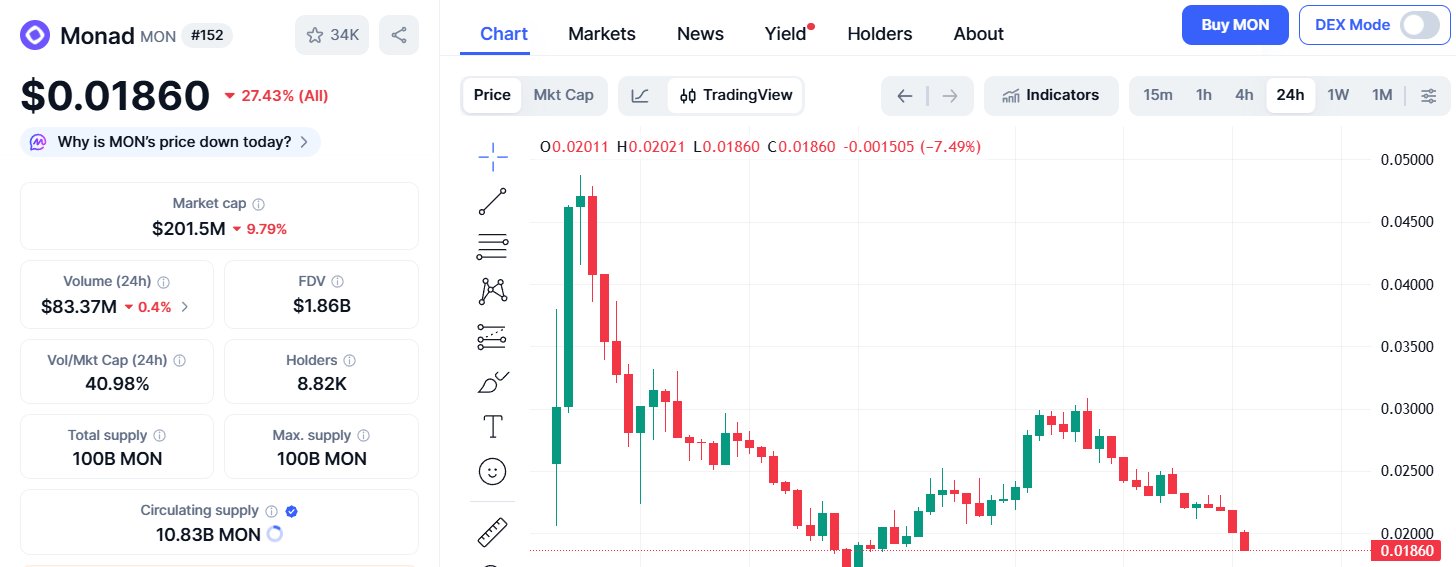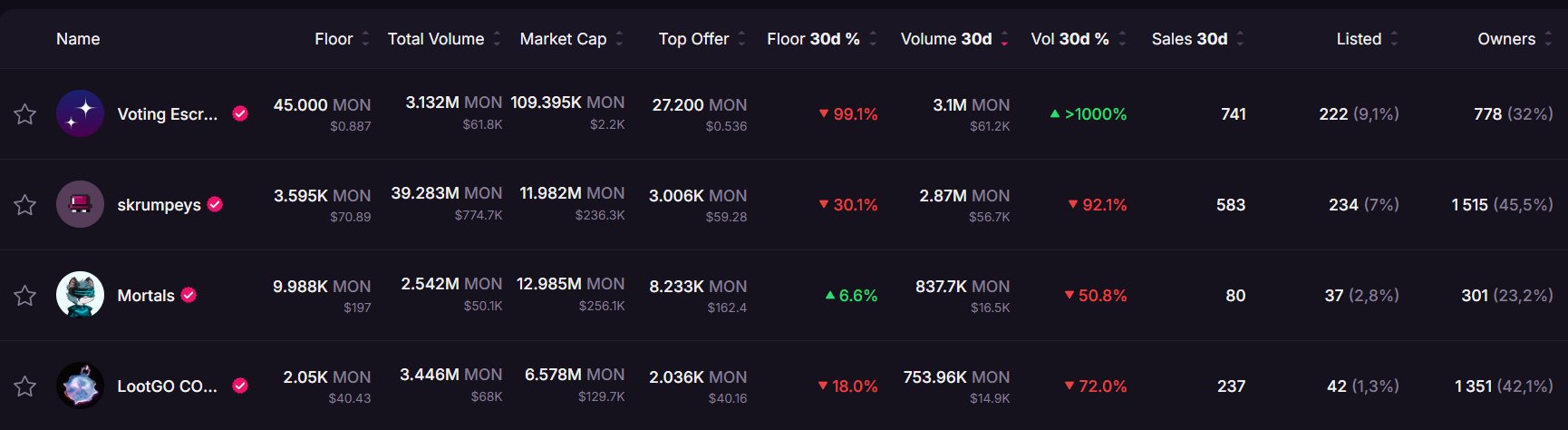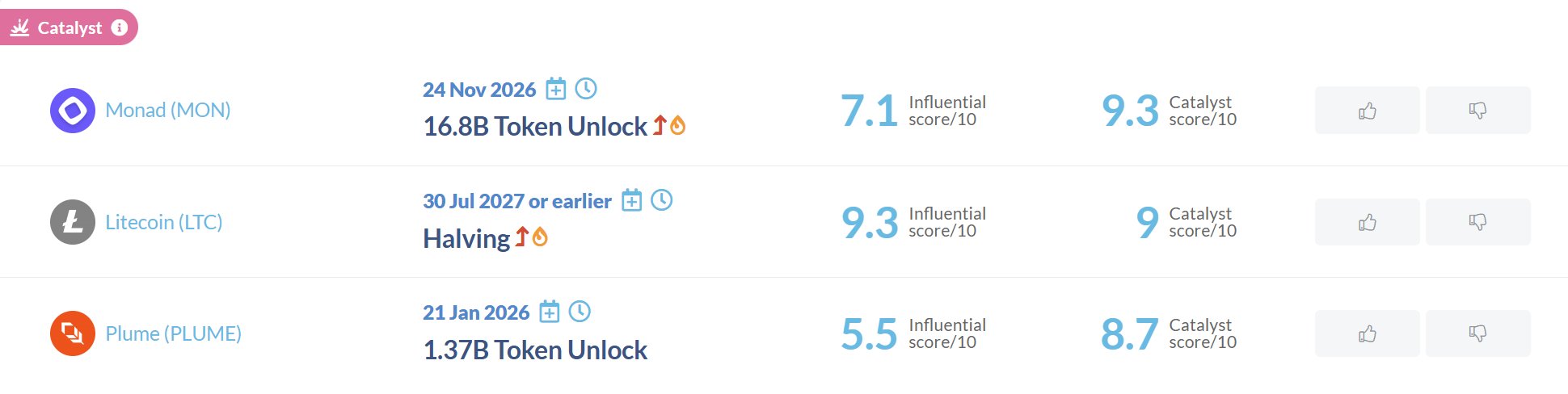
Recently saw a lot of discussions about @monad $MON and public chain moats. As an L2 contributor, I truly feel that the so-called “building ecosystem” has been disproved 🥲
If you build a public chain or L2 from scratch, with a completely sincere heart and want to develop the project, the first thing to consider is where the users and on-chain funds will come from.
When you go around seeking cooperation, you’ll find that no one pays attention, and even paying a KOL for promotion gets rejected.
At this point you realize that the most basic demand is confidence that you won’t run away, not concern for your chain’s performance or technology. You need strong VC financing to provide brand endorsement.
The question is, what do VC investors look for? You need a prestigious school and big‑company background, preferably a cryptography background, or a partner with cryptography expertise.
Assuming you happen to have all that and find a cryptography‑background partner, and successfully raise funds, a small group of people will try to farm on your chain following the financing news, and KOLs will approach you for collaboration opportunities.
Then you face the problem of how users move money onto your chain.
If it’s a public chain without a token issuance, you can only rely on testnet airdrops.
If it’s an L2, you need to find cross‑chain bridges; most bridges are pool‑to‑pool, so the types of funds that can reach your chain are very limited, essentially only the two stablecoins USDT and USDC, and ETH and its LST assets.
Of course the asset amount won’t be huge, because people are still somewhat worried you might run away.
The critical issue is that if there is no native USDT or USDC on your chain, those two tokens are actually derivatives locked in the bridge’s USDT/USDC. If the bridge encounters problems, you have no way to redeem users’ assets.
Talk to Tether and Circle for cooperation? The basic fee starts at several million dollars, so it’s better to give up.
Consequently, your chain’s DeFi liquidity is limited to USDT‑USDC and ETH‑wstETH pairs, which is meaningless.
Assets coming via bridges are obviously insufficient; the liquidity hub is exchanges. If exchanges enable withdrawals from your public chain, that would be a huge help.
However, you’ll find that most exchanges charge a listing fee; the biggest one doesn’t charge but expects value from you. Congratulations, you’ve hit the KPI.
What about TVL? You have to approach institutions, BD whales, and big holders one by one, promising returns. When you issue a token, you can supplement their TVL contribution with an APY.
On‑chain activity? Mature large DeFi projects won’t care about you unless you can promise massive liquidity—i.e., deploy at least ten million or over a hundred million dollars of TVL to the project; only then will they consider deploying on your chain. Otherwise, depth is insufficient, no one uses it, and even if they deploy, it’s meaningless.
GameFi, NFT? Basically dead.
Projects that come to you are mainly after grant funding; you can just copy an existing project,