 Stellar (XLM)
- 59ソーシャル・センチメント・インデックス(SSI)+31.97% (24h)
- #30マーケット・パルス・ランキング(MPR)+25
- 924時間ソーシャルメンション+28.57% (24h)
- 89%24時間のKOL強気比率9人のアクティブなKOL
- 概要XLM breaks through multi-year support, social heat rises 31%, cumulative score 100, driven by real use cases like UNDP and payroll, tokenized assets exceed 3B.
- 強気のシグナル
- Breakout above multi-year support
- Cumulative score 100
- UNDP regular usage
- Payroll paid in USDC
- Tokenized assets >3B
- 弱気のシグナル
- Still in a downtrend
- Price increase only 1.85%
- Social heat is high or overheated
- Possible profit taking
- Overall market volatility
ソーシャル・センチメント・インデックス(SSI)
- データ全体59SSI
- SSIトレンド(7日間)価格(7日間)センチメントの分布非常に強気 (67%)強気 (22%)中立 (11%)SSIインサイトXLM social heat is high at 58.97/100 (+32%). Driven by KOL attention +107% and breakout above multi-year support, UNDP and other real-use cases, sentiment is positively improving.
マーケット・パルス・ランキング(MPR)
- アラートインサイトXLM warning level rose to #30 (+25), social abnormality 26.28/100 increased by 211%, sentiment polarization 51.14/100 rose by 53%, linked to breakout above support and tokenization asset hotspot.
Xへの投稿
 Dao world Educator Community_Lead B19.57K @Koreanteacher1
 X Finance Bull Regulatory_Expert Educator A42.23K @Xfinancebull
🚨STELLAR $XLM DIDN’T GET READY. IT STAYED READY FTDA and Wisdom Tree already use its rails DTCC will tokenized securities on Stellar Institutions are arriving at infrastructure built for them They trust Stellar with billions And you’re scared? Not me https://t.co/B2RmlOiHw6
264 5 17.22K オリジナル >リリース後のXLMのトレンド強気XLM gains institutional adoption, outlook optimistic- X Finance Bull Regulatory_Expert Educator A42.23K @Xfinancebull
🚨🚨🚨 $XLM Holders! Did you catch this? The United Nations Development Programme is moving Stellar-based payments from pilots toward regular use. This is much bigger than another partnership announcement. The United Nations Development Programme and the Stellar Development Foundation spent 16 months studying digital payments across 17 countries, with live pilots in Haiti, Syria, Kenya, Guatemala and The Gambia. Then the results came in. In Aleppo, digital Cash for Work payments reduced estimated distribution costs from around 10% to roughly 2%. Every participant received and withdrew their money. In Haiti, the system completed every tested payment, even when the cellular network completely failed. Now the UNDP Alternative Finance Lab, led by Robert Pasicko, is helping build the governance, onboarding and safeguards needed for country offices to use these solutions without treating every deployment like a new experiment. Candace Kelly of the Stellar Development Foundation described the goal clearly: turn successful pilots into durable infrastructure for humanitarian and development finance. Real payments reaching real people in places where conventional systems struggle. This does not mean UNDP is buying XLM. But Stellar activity requires XLM for network fees, while accounts and ledger entries generally require XLM reserves. Stop judging $XLM only by today’s price. The network is proving its value where failure has human consequences. This is only the beginning.
 X Finance Bull Regulatory_Expert Educator A42.23K @Xfinancebull
🚨STELLAR $XLM DIDN’T GET READY. IT STAYED READY FTDA and Wisdom Tree already use its rails DTCC will tokenized securities on Stellar Institutions are arriving at infrastructure built for them They trust Stellar with billions And you’re scared? Not me https://t.co/B2RmlOiHw6
187 2 8.62K オリジナル >リリース後のXLMのトレンド非常に強気The United Nations Development Programme deepens cooperation with Stellar, promoting XLM-based digital payment solutions with high institutional trust.  Cypress Demanincor Trader DeFi_Expert B48.51K @CDemanincor
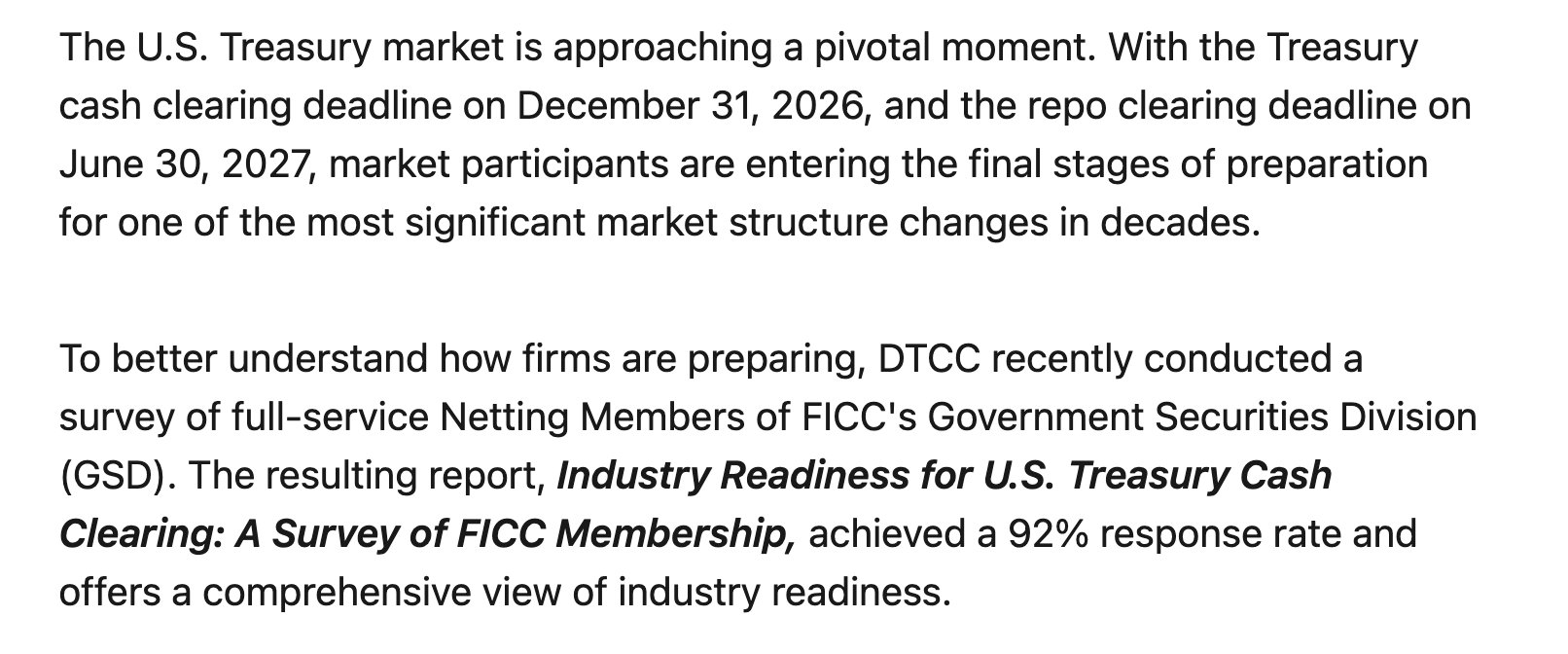
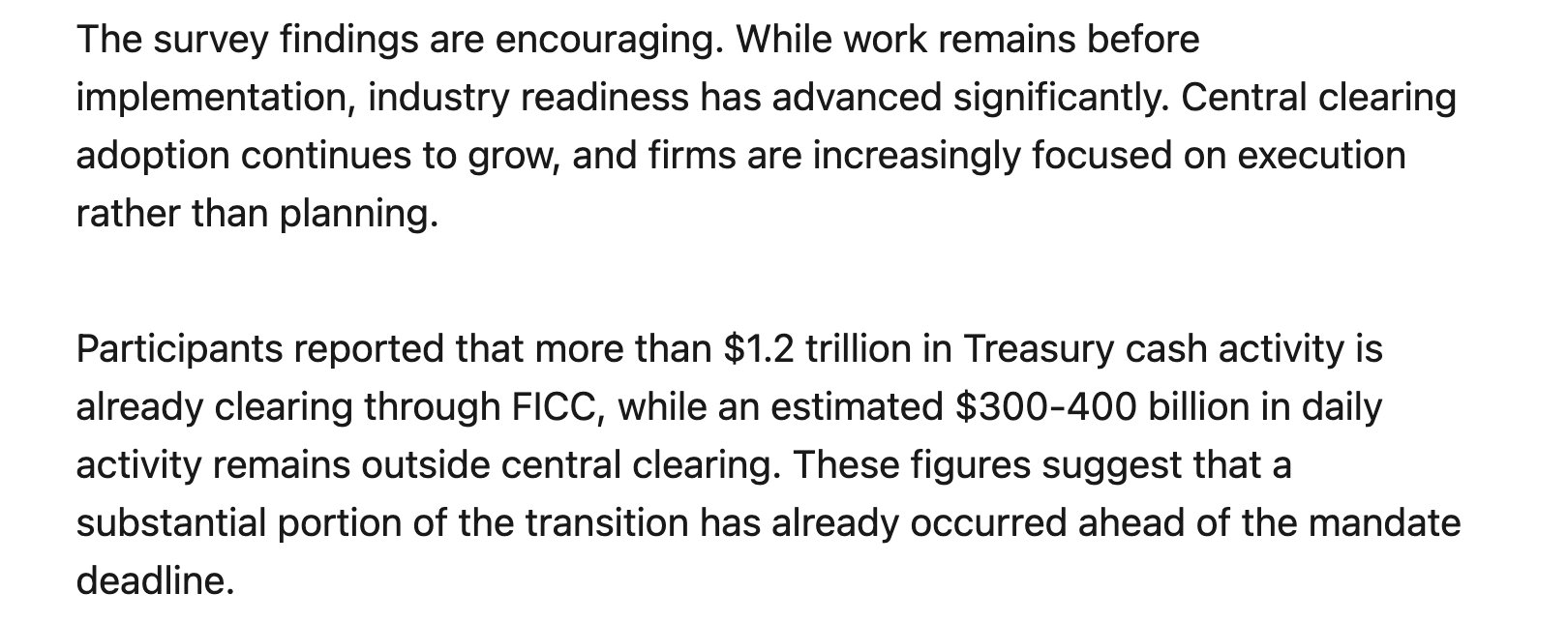
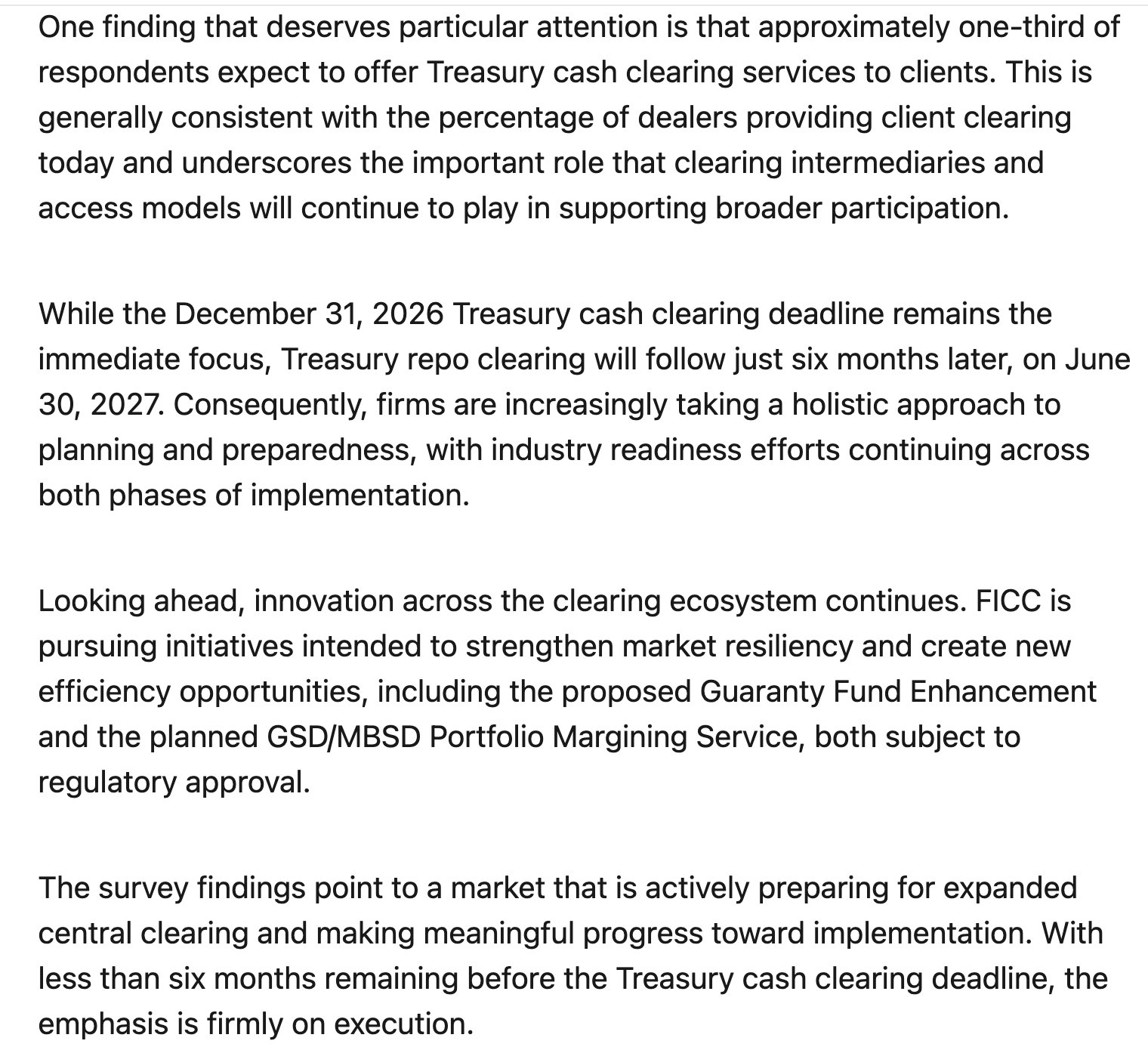
One of the biggest changes in U.S. financial markets over the next year isn't getting much attention, but it should be! Mandatory central clearing for the U.S. Treasury market is approaching, with implementation deadlines at the end of 2026 for cash Treasuries and mid-2027 for repo transactions. According to DTCC's latest industry survey • Over $1.2 trillion in Treasury cash activity is already clearing through FICC. • Firms have largely shifted from planning to execution as they prepare for the new requirements. • Approximately one-third of respondents expect to offer Treasury clearing services to clients, expanding market access. This isn't just a regulatory update. It's one of the most significant market structure changes in decades, designed to improve transparency, reduce counterparty risk, and strengthen the resilience of the world's largest government bond market. As the Treasury market modernizes, expect more innovation around collateral management, settlement, and tokenization. The infrastructure supporting global finance is being rebuilt one layer at a time. @CantonNetwork @StellarOrg
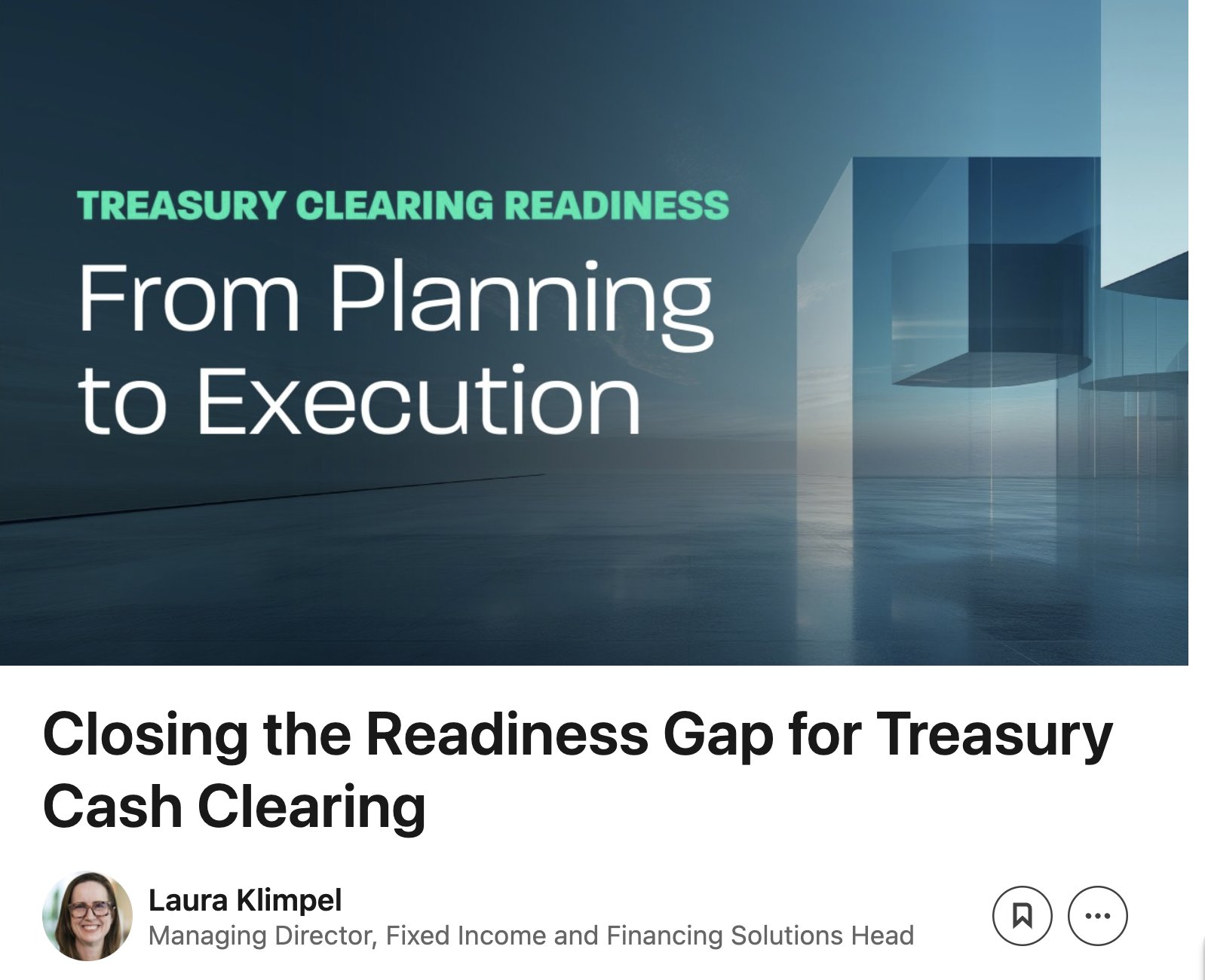 31 1 2.74K オリジナル >リリース後のXLMのトレンド非常に強気Mandatory central clearing of the U.S. Treasury market will drive modernization of financial infrastructure and tokenization innovation.
 LOBSTR Wallet Dev Educator B31.49K @lobstr
You can only keep one for the next 5 years: $XLM or $XRP. Choose 🦞
121 57 10.89K オリジナル >リリース後のXLMのトレンド中立Hold only XLM or XRP for the next 5 years, must pick one CW OnChain_Analyst Trader B22.77K @CW8900
$XLM is accumulating strongly once again. The accumulation score is 100. https://t.co/CzFCEQpIzj
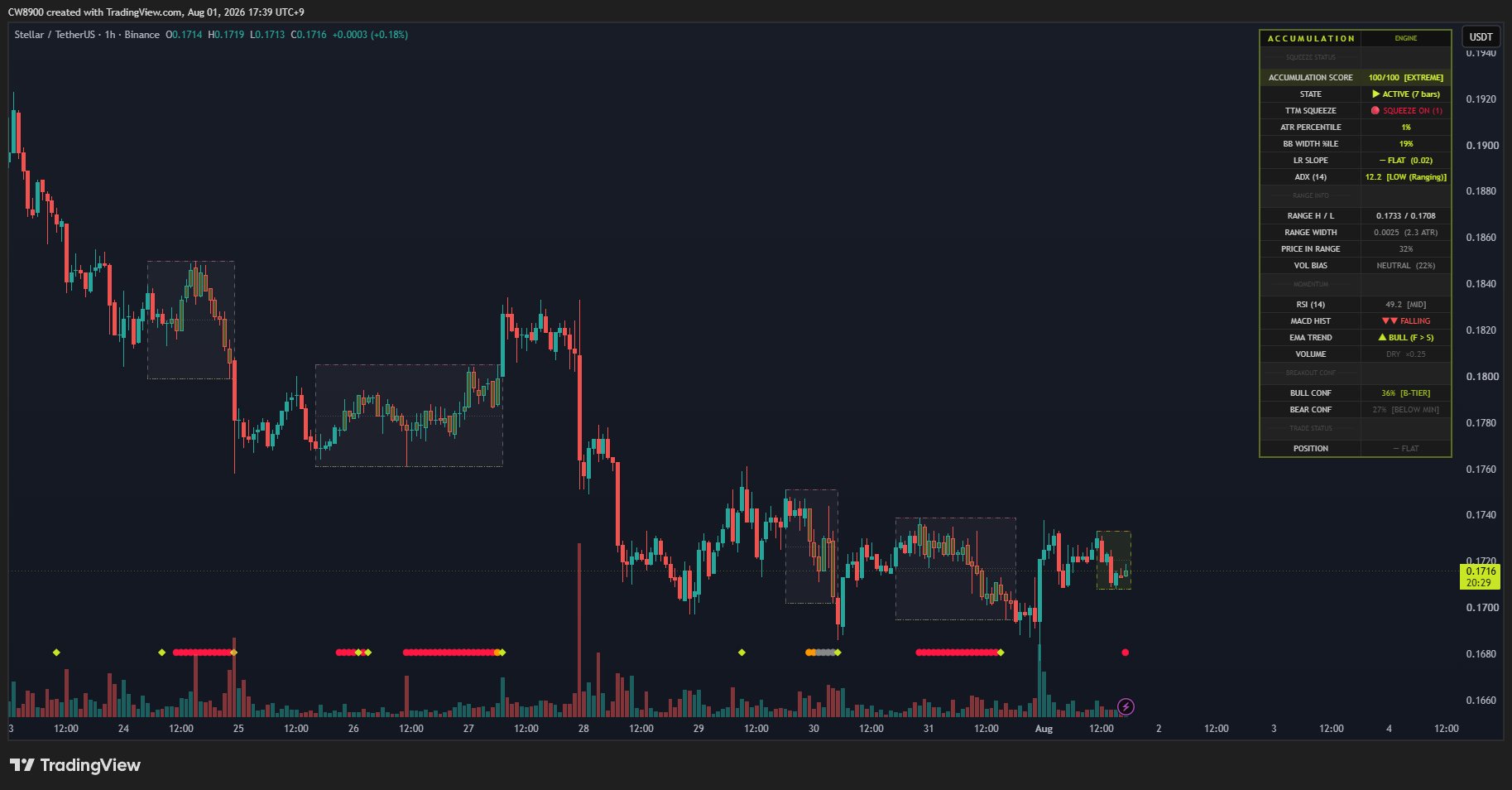 129 4 4.61K オリジナル >リリース後のXLMのトレンド非常に強気XLM is in an extremely strong accumulation phase, with technical indicators showing its accumulation score as high as 100 points.
 @TakeProfitNow D1.15K @TakePr0fitN0w
$XLM has done something very few crypto charts manage to do. It has respected the same long-term structure through multiple market cycles. And now the market is approaching what could become the third major interaction with that exact trend. That’s not coincidence. That’s structure. Most traders only look at horizontal resistance. The bigger money watches recurring behavior. Every cycle, Stellar creates a major expansion, exhausts buyers, spends years compressing, and then returns to test the next point on the long-term trajectory. The market remembers. Even if most participants don’t. This is why the current area is so interesting. Price isn’t randomly sitting near the lows. It’s sitting directly above a multi-year support zone that has survived bear markets, liquidity sweeps, and years of distribution. Those kinds of bases don’t appear every month. If buyers defend this region again, the path toward the next structural level becomes surprisingly clean. The chart suggests a progression rather than one explosive move. First comes acceptance. Then acceleration. Then momentum starts attracting attention. By the time everyone is talking about Stellar again, most of the easy move is usually already behind. People laugh at projections like $1.50+ because they’re anchored to today’s price. They forget that $XLM has already produced life-changing moves before. Crypto doesn’t reward people for buying what already looks strong. It rewards those willing to recognize repeating structures before the crowd does. If this long-term trend remains intact, Level C isn’t some fantasy target. It’s simply the next logical destination on a structure that has been respected for nearly a decade.
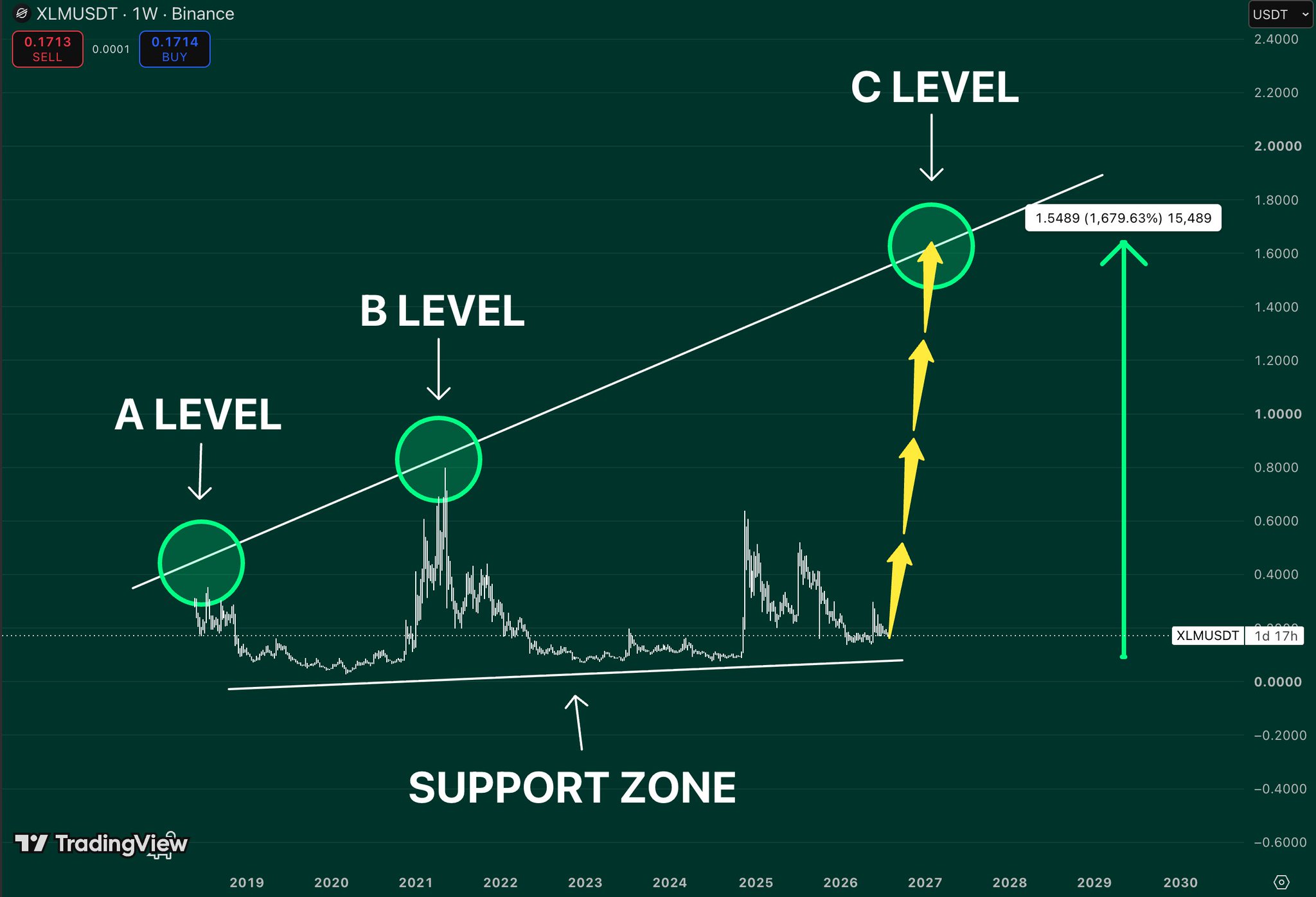 95 5 3.30K オリジナル >リリース後のXLMのトレンド非常に強気XLM is at a long-term upward structure support level, expected to rise significantly toward a C-level target.
 Scopuly - Stellar Wallet Media Educator B15.93K @scopuly
💼 Another real-world use case for Stellar $XLM . Zebec, Stellar, and Tangem are launching custom hardware wallets for employee payroll. Here's why it matters: ⚡️ Salaries paid in USDC on Stellar $XLM 💳 Instant spending via Mastercard cards 🔐 Seedless, self-custody hardware wallets 🌍 Built for global companies and cross-border payroll This isn't another crypto wallet launch. It's infrastructure designed to make paying employees worldwide faster, cheaper, and easier. As more businesses move payroll on-chain, $XLM and Stellar continue expanding their role in real-world financial infrastructure. 🚀 #Stellar #XLM
 111 2 1.89K オリジナル >リリース後のXLMのトレンド非常に強気Stellar (XLM)联合推出全球薪资硬件钱包,拓展其在现实金融基础设施中的应用。
 YashasEdu FA_Analyst OnChain_Analyst B9.44K @YashasEdu
 Mesh D5.72K @MeshClans
So @StellarOrg has $3B+ in tokenized assets now, roughly 5x what it had a year ago. Franklin Templeton, WisdomTree, Ondo, Paxos, Centrifuge, Etherfuse, all building there. Issuance clearly isn't the bottleneck anymore. The harder problem is making those assets do something onchain. Tokenized treasuries, sovereign debt, private credit, they don't follow the same pricing mechanics. You want to build a lending market or structured product around them, you need price feeds. And on Soroban, cross-contract calls carry real gas costs, so maintaining separate oracle integrations per provider per protocol gets expensive fast. SEP-40 is how Soroban solves this. It defines a single interface for smart contracts to request price data, regardless of which oracle provider sits underneath. Protocols write to one interface. If the provider changes, nothing breaks. @redstone_defi is already running production feeds under the standard: 🔸 USDC, EURC, XLM, PYUSD 🔸 Etherfuse sovereign debt tokens (CETES, USTRY) 🔸 SolvBTC p
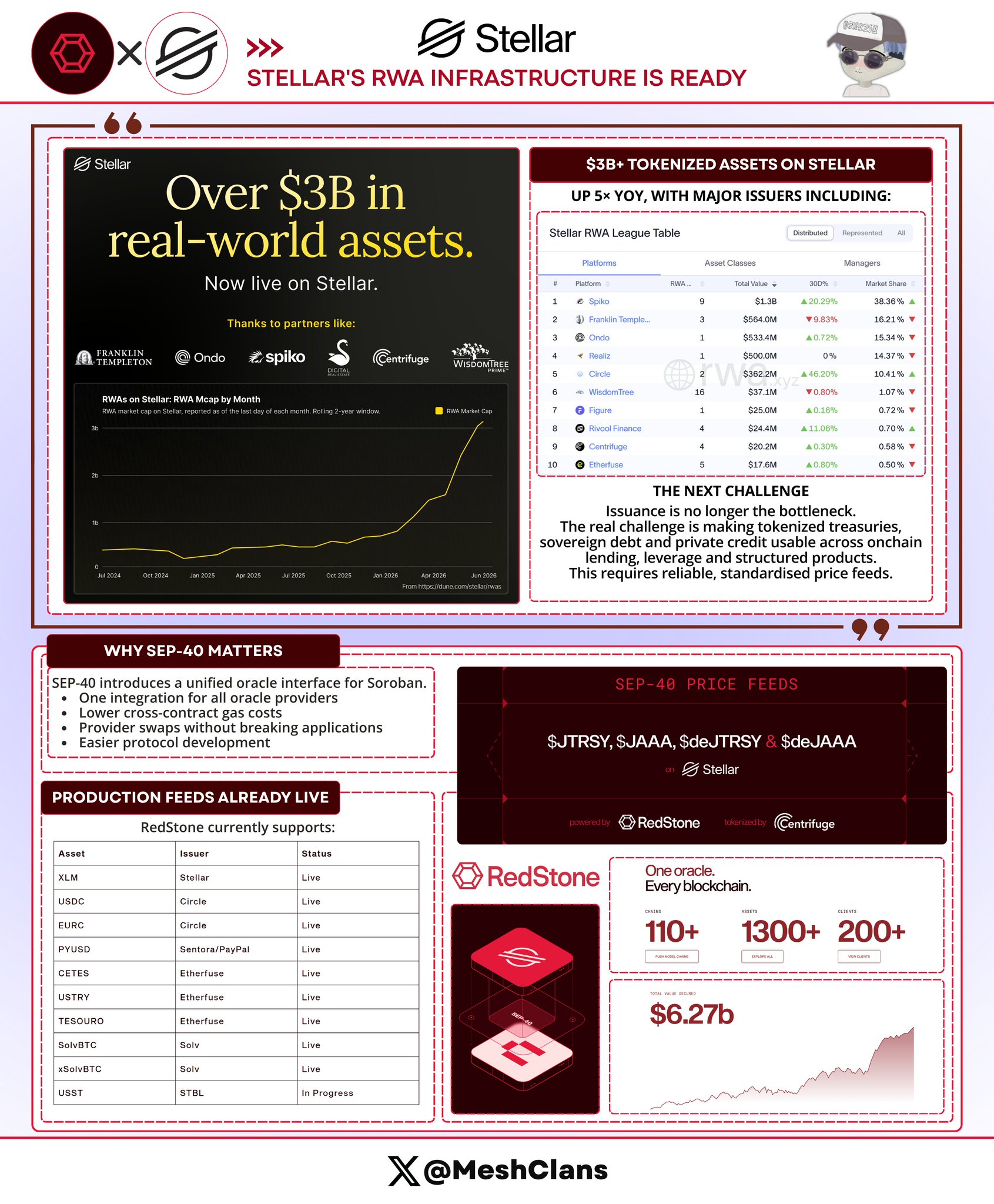 90 47 3.50K オリジナル >リリース後のXLMのトレンド非常に強気Stellar ecosystem RWA assets surpass $3 billion, a 5× YoY increase, and address oracle challenges through SEP‑40.
 AYMAN TA_Analyst Trader S3.75K @Crypto_Ayman
#XLM | $XLM The coin is in a downtrend for a while It reached a resistance that was broken and turned into support for the coin 📈 Staying above support (the blue box) with the downtrend broken provides a strong chance for a powerful rise https://t.co/h3eZ4G9biX
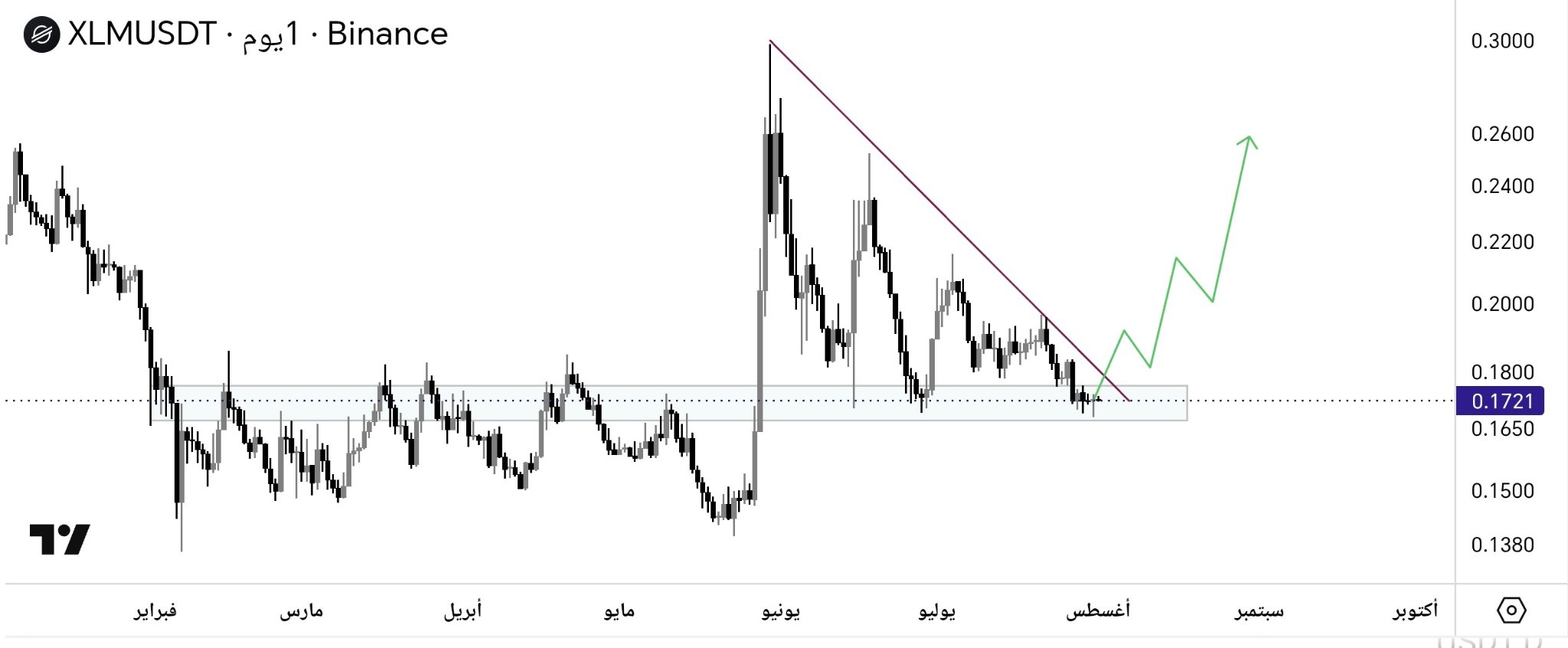 AYMAN TA_Analyst Trader S3.75K @Crypto_Ayman
My view on $XLM The 0.1861 level is very important; breaking this level makes the first target $0.25 https://t.co/jwIMeRQx8I
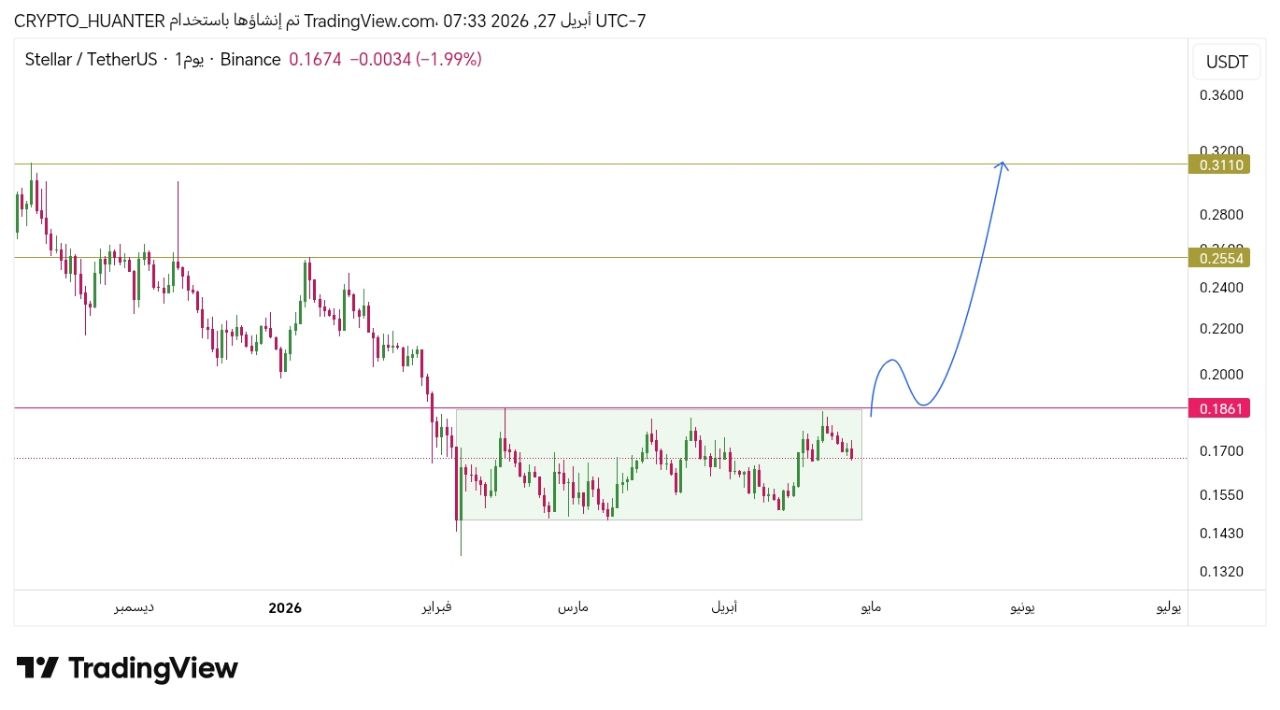 5 0 1.24K オリジナル >リリース後のXLMのトレンド強気XLM breaks out of downtrend and key resistance, target $0.25.
- Dao world Educator Community_Lead B19.57K @Koreanteacher1
On November 4, 2019, the Stellar Development Foundation (SDF) burned approximately 55.4 billion XLM. This was more than half of the total supply at the time, which was about 105.4 billion XLM. As a result, Stellar did not become another project destroyed by a price collapse. Instead, it became a strong project capable of building real utility on a healthier foundation. During bull markets, XLM even recorded gains of over 600%. The main reasons were as follows: The original distribution plan was no longer realistic. A very large amount of XLM had been allocated to individual giveaways and partner distribution programs. After ending these programs, SDF burned 50 billion XLM from those allocations. SDF decided that it did not need such a large amount of tokens for its operations. After reviewing its growth plans for the next ten years, SDF concluded that it could achieve its goals with fewer XLM. As a result, it also burned an additional 5 billion XLM from its operating funds. SDF wanted its holdings to better match its mission and the size of the ecosystem. In its official announcement, SDF explained that the reduced amount was more appropriate for its mission and would allow the foundation to manage its resources more responsibly and efficiently. --------------------- And this is the current situation of Pi Network. Since the Open Network launch, Pi has fallen to around $0.08 without showing any meaningful price recovery. It now appears possible that the price could fall to between $0.05 and $0.01. What comes next—$0.001? Despite this continued decline, the Pi Core Team has not made a single meaningful statement about tokenomics. The 20 billion Pi distributed across approximately 10,000 Core Team wallets are not locked, and the plan for using these tokens remains highly unclear. The Pi Foundation should also regularly disclose how its Pi holdings are being used, just as the Stellar Development Foundation publishes information about the use of its funds. The large amount of unmined Pi creates the risk of excessive future supply, while the lack of a clear distribution plan discourages new investors and institutional capital from entering the ecosystem. If part of this supply is unnecessary, it should be burned. Pi should also introduce a transaction-fee burn mechanism. Stellar’s transaction fees are removed from circulation rather than returned to users, which has an effect similar to burning. Pi must also make a serious effort to reduce its circulating supply through fee burning or other deflationary measures. @PiCoreTeam @nkokkalis #pi #파이 #파이코인
108 28 8.95K オリジナル >リリース後のXLMのトレンド中立XLM profits from token burn, while Pi price keeps falling and lacks transparency


