Kelp is migrating rsETH from LayerZero's 1-of-1 DVN to Chainlink CCIP's larger multisig. Bigger threshold, same architecture.
Intent architecture is the structural alternative. A solver delivers existing tokens from inventory on chain Y, gets paid on chain X. A verifier confirms the swap. No new supply is ever created on the destination.
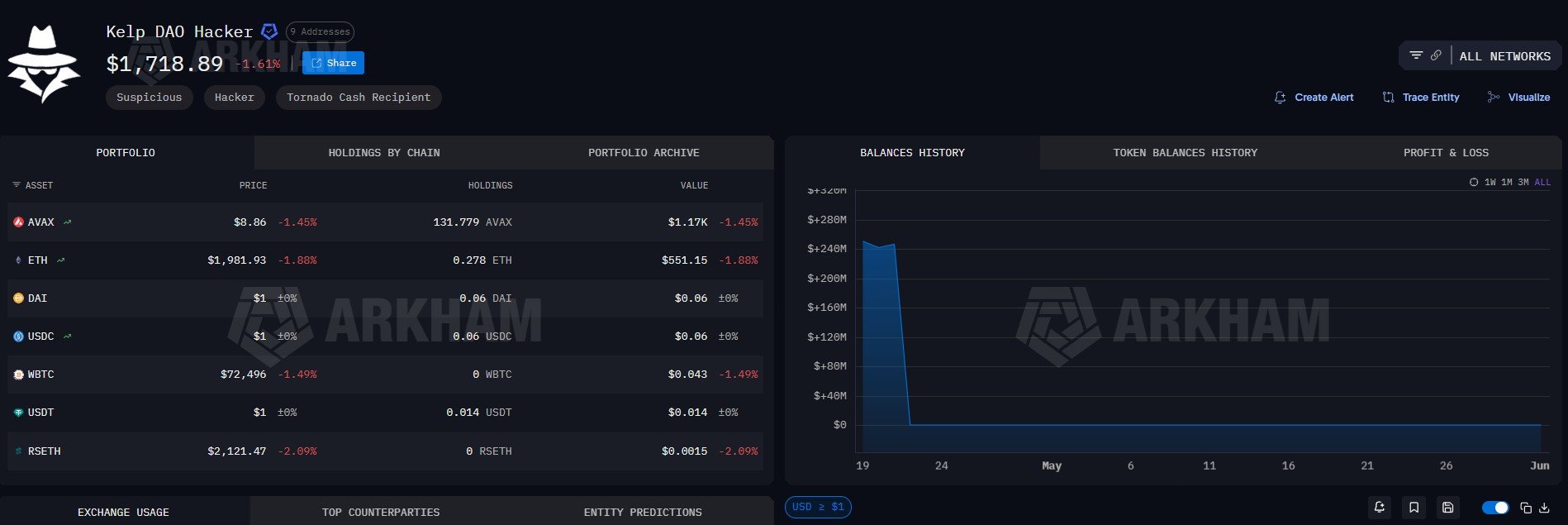
That removes the failure mode that hit Kelp. Lock-and-mint bridges create new tokens when a multisig attests that tokens were locked elsewhere. Compromise the multisig and you mint without locking. ~116,500 unbacked rsETH is what that looks like.
A bigger multisig does not fix this. Removing the mint does.
The verifier in intent architecture still needs trust. But the blast radius is bounded: a failed verification stalls the swap, it does not produce unbacked $300M.
The architecture is the risk, not the threshold. After Kelp, every protocol still gating synthetic supply with a multisig is making a deliberate choice.

Kelp DAO Restaked ETH (RSETH)
Kelp DAO Restaked ETH Dados de preços ao vivo
Kelp DAO Restaked ETH RSETH Histórico de Preços USD
Adquira RSETH agora
Compre e venda RSETH de forma fácil e segura na BitMart.Ganhar
Coloque suas criptomoedas ociosas para trabalhar e ganhe renda passiva com poupança, staking e muito mais.Kelp DAO Restaked ETH X Insight
And the saga continues…
KelpDAO switched FROM multi-key TO a 1/1 setup
Read that again
They deliberately downgraded their security
That's not just careless
It shows a fundamental disregard for user funds
A ton of this is just completely untrue.
1) Kelp originally used the defaults which were MultiDVN or DeadDVN and manually migrated to a 1/1 config later
2) Almost 100% of the volume on a 1/1 config was rsETH
3) Not using a 1/1 for production applications is mentioned many times in the documentation.
The defaults Kelp is referencing in their screenshot were multiDVN or DeadDVN, which force-rejects an application using the defaults at all and requires them to manually set configuration.
rsETH was originally configured to use the default LayerZero configuration of a multiDVN setup of LayerZero Labs + Google:
Here are the exact transactions where that happens
Ethereum → Arbitrum:
https://t.co/C2uCxmpBCX
at 2024-02-06 03:09:47 UTC
Ethereum → Optimism:
https://t.co/vuQWxeyUUA
at 2024-02-06 03:09:59 UTC
KelpDAO then manually changed these to 1/1 configs:
For the original Feb 6 Ethereum routes to Arbitrum/Optimism, KelpDAO’s Ethereum contract switched from defaults to manual OApp-scoped config on 2024-04-0
Bryan responds and says it’s mostly lies.
What a saga man… https://t.co/rUkSx70Q6D