
Blockchain ecosystems are walled gardens.
Ethereum contracts can't talk to Solana. Solana can't read Avalanche etc. This forces devs to pick a chain. I've met a lot of devs and they're rarely as 'tribal' as bag holders. They want to be multi-chain. But this requires:
Mua tiền điện tử
thẻ
Giao dịch P2P
Mua USDT trên thị trường
Thẻ Credit/Debit
Mua tiền mã hóa bằng thẻ Visa hoặc MasterCard
Dịch vụ thanh toán của bên thứ ba
Mua tiền mã hóa qua MoonPay, Simplex và nhiều dịch vụ khác
BitMart Card
Giúp bạn sống theo phong cách tiền mã hóa
Thẻ trả trước tiền mã hóa
Nhận thẻ Mastercard có thể sử dụng ngay
USDⓈ-M
Sử dụng USDⓈ làm tài sản đảm bảo
COIN-M
Sử dụng chính COIN làm tài sản đảm bảo
TradFi
Dịch vụ giao dịch trọn gói cho kim loại, cổ phiếu và ngoại hối
Giao dịch demo
Tìm hiểu cách giao dịch không gặp rủi ro
Tổng quan về Futures
Nền tảng toàn diện cho Futures
Futures King
Quỹ thưởng 478,000 USDT
Tăng trưởng
Rewards
Rút thăm Futures hàng ngày
100% cơ hội chiến thắng với giao dịch hàng ngày
Rút thăm Spot hàng ngày
Nhận các giải thưởng lớn trị giá 8,888 USDT
Nạp tiền điện thoại
Nạp tiền điện thoại di động dễ dàng, online, bảo mật
Send
Send money globally, fast and secure
BitMart Mall
Trực tiếp trên tiền mã hóa

AO (AO)
$ 2.73 (AO/USD)
-8.39%
24H
AO Dữ liệu giá trực tiếp
Giá AO hôm nay là $ 2.73 (AO/USD). Với vốn hóa thị trường là $ 20.08M USD. Khối lượng giao dịch 24 giờ là $ 152.26K USD, Biến động giá trong 24 giờ là -8.39%, Và lượng cung lưu hành là 7.36M AO.
AO AO Lịch sử giá USD
Theo dõi giá của AO hôm nay, 7 ngày, 30 ngày và 90 ngày
Kỳ
Thay đổi
Biến động (%)
Hôm nay
$ 0.24
-8.39%
7ngày
$ 0.91
46.23%
30ngày
$ 0.97
50.78%
90ngày
$ 0.37
15.02%
Sở hữu AO ngay
Mua và bán AO dễ dàng và an toàn trên BitMart.
AO Thông tin thị trường
$ 2.73 Biến động 24 giờ $ 3.11
Cao nhất từng ghi nhận
$ 15.23
Thấp nhất từng ghi nhận
$ 1.57
Biến động 24 giờ
-8.39%
Khối lượng 24 giờ
$ 152,255.61
Nguồn cung lưu hành
7.35M
AO
Vốn hóa thị trường
$ 20.08M
Nguồn cung tối đa
21.00M
AO
Vốn hóa thị trường đã pha loãng hoàn toàn
$ 57.32M
Giao dịch AO
AO X Insight

kyall
VC
FA_Analyst
B
 2.5K @kyall_pcap
 Tăng giá
The tweet introduces AO as a computation layer designed to solve blockchain interoperability issues, enable multi-chain deployment, and new use cases, but it is currently still in the testnet phase.
kyall
VC
FA_Analyst
B
2.5K @kyall_pcap - Multiple deployments (one per chain)
- Bridge protocols (hacks waiting to happen)
- Different security models
- Fragmented liquidity
- Compatibility nightmares
kyall
VC
FA_Analyst
B
2.5K @kyall_pcap Devs are better off building deep than wide. Build more features for your current users, than expand to more segments.
Plus, crypto history is littered with the bodies of those who tried to go wide - mostly due to inherent failure of bridging ($2B+ stolen in 2022-2023).
kyall
VC
FA_Analyst
B
2.5K @kyall_pcap AO actually does solve this. It operates above the chain layer. One smart contract, that can send prompts to any chain!
No bridges needed. No redeployments. No fragmented liquidity.
AO is not a blockchain. It's a computation layer.
So what does this mean for devs?
kyall
VC
FA_Analyst
B
2.5K @kyall_pcap Build once. Deploy everywhere.
But it solves so much more than just the multi-chain problem.
By separating computation from consensus users pay for security (cheap) and storage (one-time), with computation running at near-zero marginal cost.
This unlocks many new use cases such as running AI models on-chain, complex scientific calculations and real on-chain gaming.
Right now it's basically a testnet. But it's interesting tech worth watching imo.
 4
4
 2
2
 176
176
2025-10-28 22:19
Xu hướng của AO sau khi phát hành
Tăng giá
The tweet introduces AO as a computation layer designed to solve blockchain interoperability issues, enable multi-chain deployment, and new use cases, but it is currently still in the testnet phase.

Matt 💮. efh
Trader
TA_Analyst
B
1.7K @mattfromblock Cực kỳ lạc quan
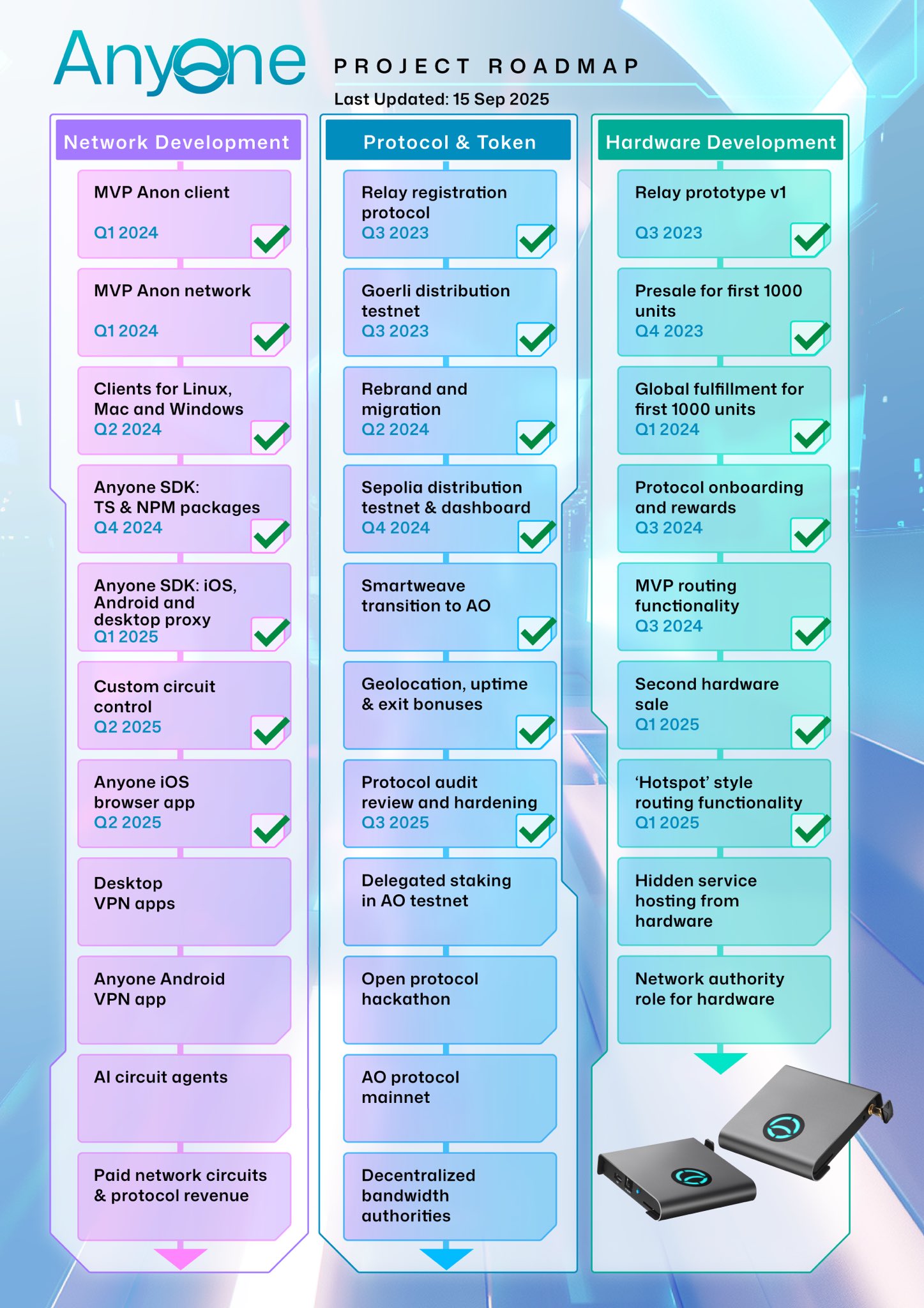
The Anyone project released an updated roadmap, showcasing parallel development progress and future plans for the network, protocol, token, and hardware, which provides positive reference for the project's prospects.

ANyONe Protocol D
72.9K @AnyoneFDN We’re building hard in parallel: the network, protocol, token and hardware.
Check out the next steps in our updated roadmap 👇 https://t.co/xTEc2Dq9NH
 375
32
20.6K
375
32
20.6K
2025-09-18 17:39
Xu hướng của AO sau khi phát hành
Cực kỳ lạc quan
The Anyone project released an updated roadmap, showcasing parallel development progress and future plans for the network, protocol, token, and hardware, which provides positive reference for the project's prospects.
Dự đoán giá
Thời điểm phù hợp để mua AO là khi nào? Liệu tôi nên mua hay bán AO bây giờ?
Khi quyết định xem đây có phải là thời điểm tốt để mua hoặc bán AO (AO) hay không, điều quan trọng trước tiên là phải phù hợp với chiến lược giao dịch và mức độ chấp nhận rủi ro của riêng bạn. Các nhà đầu tư dài hạn và các nhà giao dịch ngắn hạn thường diễn giải điều kiện thị trường theo các cách khác nhau, vì vậy quyết định của bạn nên phản ánh cách tiếp cận cá nhân. Theo phân tích kỹ thuật 4 giờ mới nhất của AO, tín hiệu giao dịch hiện tại là Hold. Theo phân tích kỹ thuật 1 ngày mới nhất của AO, tín hiệu hiện tại là Bán.

Dự đoán Beacon
Dự báo giá xác suất cho (24 giờ tới)Tuyên bố miễn trừ trách nhiệm về dự đoán Beacon
Kết quả dữ liệu hiển thị trên trang này được phân tích dựa trên dữ liệu giao dịch thực tế (OHLCV) của cặp giao dịch đã chọn cùng với các chỉ báo kỹ thuật tương ứng.
Dự đoán này là một sản phẩm kỹ thuật thử nghiệm và chỉ được cung cấp để tham khảo. Đây không phải là lời khuyên đầu tư. Những sự kiện bất ngờ trong thế giới thực có thể tác động đáng kể đến hành vi thị trường. Các nhà giao dịch nên đưa ra quyết định một cách thận trọng.
Dự đoán này là một sản phẩm kỹ thuật thử nghiệm và chỉ được cung cấp để tham khảo. Đây không phải là lời khuyên đầu tư. Những sự kiện bất ngờ trong thế giới thực có thể tác động đáng kể đến hành vi thị trường. Các nhà giao dịch nên đưa ra quyết định một cách thận trọng.
Giới thiệu AO
AO (AO) is a cryptocurrency launched in 2025. AO has a current supply of 7,357,213.75475071. The last known price of AO is 2.54454433 USD and is up 2.27 over the last 24 hours. It is currently trading on 19 active market(s) with $227,583.75 traded over the last 24 hours. More information can be found at https://ao.arweave.net/.
Đọc thêm
Link chính thức
Trình khám phá chuỗi