When regulations are in place
it creates a reason for large players to move
The funds we have been watching from the outside
are entering the phase of coming inside
From here, I might be the only one who thinks the landscape could change 🔥🙄
$BTC
Bitcoin AI 實時價格數據
Bitcoin AI BTC 價格歷史 USD
Bitcoin AI 社交媒體動態
It may look difficult, but it's a really important move, right? ☺️
When the rules are set = large sums of money can move safely
In other words
from "the world of a few people"
to a flow approaching "everyone's assets"
I feel the future is gradually becoming reality 🌱
A neutral stance for Q2 2026 amidst uncertainty
As we enter Q2 2026, we’re maintaining a neutral outlook on the crypto markets. Rapidly changing macro conditions have made directional views highly unreliable.
Key factors at play:
‣ Geopolitical Risks: The conflict in Iran has disrupted expectations for fiscal and monetary stimulus, pushing investors into cash as they brace for potential global recession risks.
‣ Regulatory Developments: While progress on a U.S. crypto market structure bill and advancements in quantum computing are important, they currently take a backseat to the prevailing geopolitical uncertainties.
‣ Cash Holdings on the Rise: Funds are increasingly holding cash, with BofA's survey showing holdings rose almost 1 percentage point to 4.3% within a month - the fastest increase since 2020.
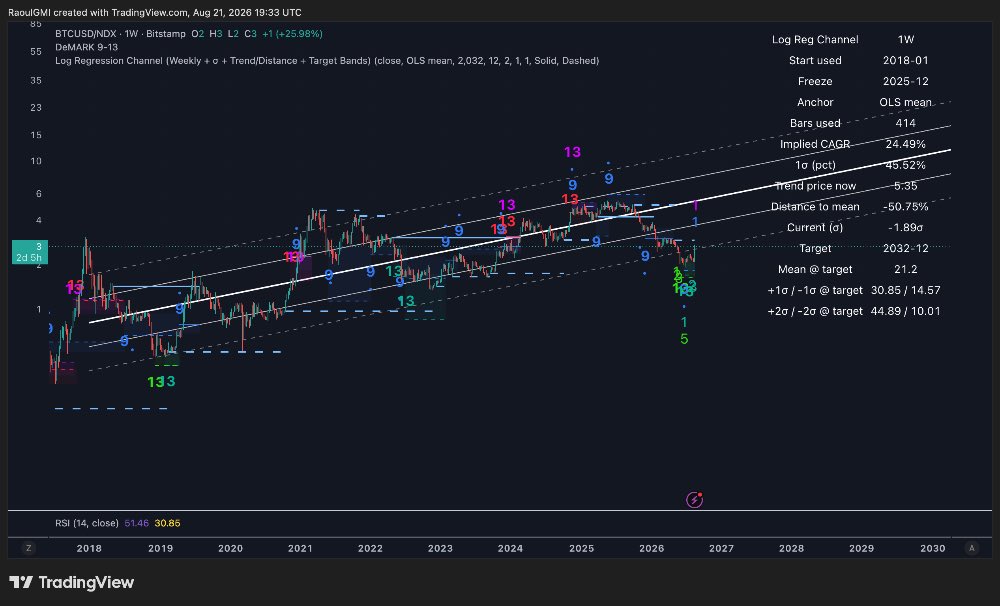
‣ Crypto’s Relative Resilience: Despite significant turbulence across asset classes, bitcoin has been relatively resilient, experiencing only about a one standard deviation decline, compared to the S
Corporate Bitcoin Treasuries Keep Growing as Strive Adds More BTC
Strive added 113 BTC to its holdings, reinforcing a steady accumulation trend as companies increasingly treat Bitcoin as a long-term reserve asset rather than a short-term trade. https://t.co/NAt9B2lrVU
How Many Bitcoins Are There?
How Much Is Bitcoin Today?
What Is Bitcoin Mining?
Bitcoin (BTC) is a digital asset and a payment system invented by Satoshi Nakamoto who published a related paper in 2008 and released it as open-source software in 2009. The system featured as peer-to-peer; users can transact directly without an intermediary. Transactions are verified by network nodes and recorded in a public distributed ledger called the blockchain. The ledger uses bitcoin as its unit of account. The system works without a central repository or single administrator, which has led the U.S. Treasury to categorize bitcoin as a decentralized virtual currency. Bitcoin is often called the first cryptocurrency, although prior systems existed. Bitcoin is more correctly described as the first decentralized digital currency. It is the largest of its kind in terms of total market value by now.