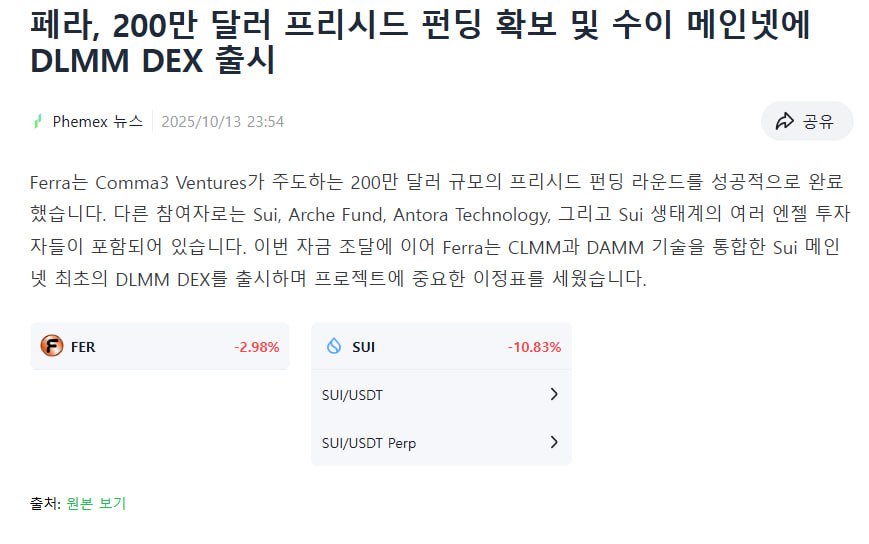
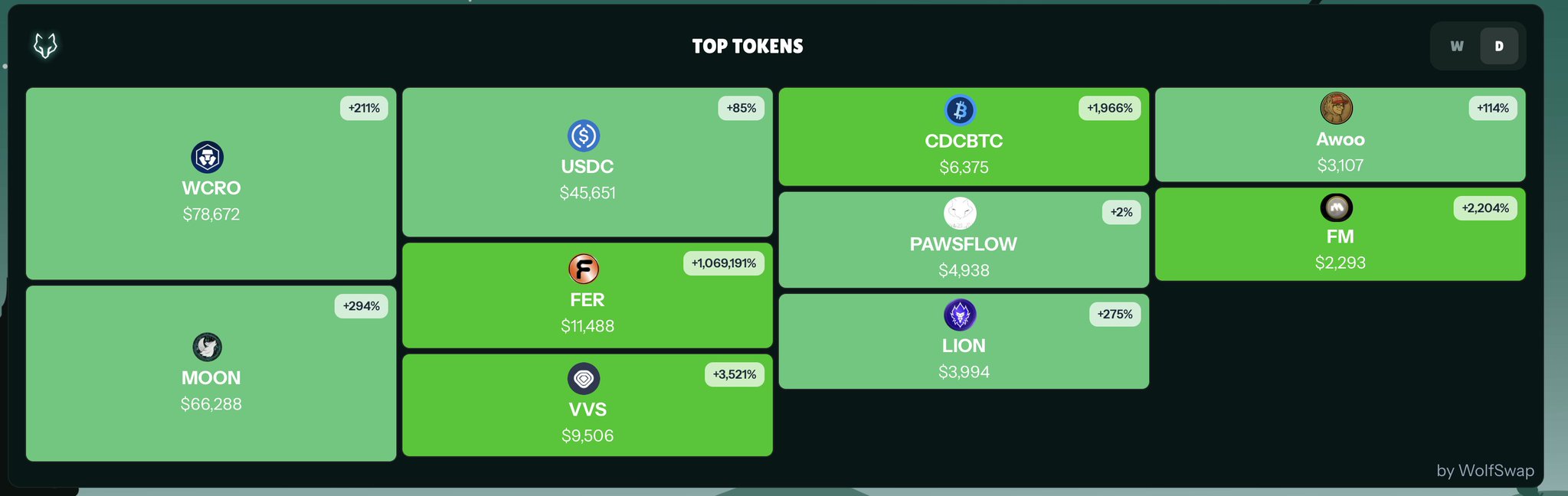
The tweet explains the AMM principle and Ferra protocol's liquidity mechanism.
🧲Before understanding what Ferra is talking about ⁉️
Unlike typical DEXs, @ferra_protocol says it will mix various liquidity mechanisms to provide efficient liquidity – what does that actually mean..
They say they will mix DLMM, CLMM, and DAMM. Before figuring that out..
We need to know what AMM is.
Because DLMM, CLMM, and DAMM are all forms of AMM.
So let’s briefly look at AMM.
Fundamentally, on most CEXs where trading occurs there is an order book, just like the stock market.
Much like the stock market.
However, DEXs do not have an order book.
Prices are determined solely by formulas.
In other words, AMM stands for Automated Market Maker.
Anyone who provides liquidity creates a price and can earn trading fees.
Let’s use the meme‑coin market as an example.
Suppose a person named 김장통 (Kim Jang‑tong) creates a new meme coin called “KMCH”.
The total supply is 1 M, and 김장통 also supplies 10 ETH as liquidity.
Then the initial price of KMCH is determined by the ratio of 10 ETH to 1 M.
That works out to 1 ETH = 100 K KMCH.
When someone buys the token, the price goes up; the more sellers, the price goes down.
You’ve probably experienced this many times, right??
In many meme‑coin markets, continuous buying drives prices up sharply, and when a large holder sells a massive amount, the price crashes and the coin ends up as dust.
In short, AMM is a system where the price is automatically set by an algorithm based on liquidity providers – that’s its essence.
Thus, Ferra aims to efficiently structure this type of liquidity provision.
Let’s see what they intend to do.