Acheter des cryptomonnaies
carte
P2P Trading
Achetez des USDT sur la marketplace
Carte bancaire
Achetez des cryptomonnaies avec une carte Visa ou Mastercard
Paiement par un tiers
Buy des crypto via MoonPay, Simplex et plus
BitMart Card
Dynamisez vos investissements dans les cryptos
Carte prépayée crypto
Obtenez instantanément une Mastercard prête à l'emploi
Échanger
Spot
Négociez des cryptomonnaies rapidement et de manière professionnelle
BM Discovery
La plateforme de découverte d'actifs On-Chain la plus rapide
DEX
bêta
La solution la plus simple pour trader en chaîne.
Marge
5x
Augmentez vos profits grâce à l'effet de levier
Pré-marché
Planifiez à l'avance, saisissez l'opportunité
USDⓈ-M
En utilisant USDⓈ comme garantie
COIN-M
Utiliser la cryptomonnaie elle-même comme garantie
TradFi
Un guichet unique pour les métaux, les actions et le forex
Démo de trading
Apprenez à trade sans risque
Aperçu des contrats à terme
Une plateforme unique pour tout ce qui concerne les contrats à terme
Futures King
Cagnotte de 478 000 USDT
Augmenter
Aperçu des gains
Actifs inactifs, obtenez des rendements en toute simplicité
Épargne
Gagnez des intérêts grâce à vos avoirs.
Staking
Staking facile, récompenses élevées
Gestion de patrimoine
Développez votre patrimoine avec une équipe d'actifs de premier ordre Top
RWA
Conservez le BMRUSD et profitez du rendement
Offre exclusive pour les VIP
Gagner en toute sécurité pour les utilisateurs VIP
Rewards
Centre de récompenses
Découvrez des récompenses exclusives d'une valeur allant jusqu'à 14 000 USDT
Lancement Prime
Une plateforme de lancement de jetons et NFT
Programme d'affiliation
Rejoignez-nous pour profiter de commissions élevées
Powerdrop
La solution airdrop de nouvelle génération est DISPONIBLE !
Centre des événements
Le guichet unique pour toutes les opérations commerciales
Tirage au sort quotidien futures
100% de chances de gagner avec les tradings quotidiens
Tirage quotidien Spot
Gagnez 8 888 USDT en grands prix
Staker pour voter
Gagnez des airdrops en votant
Institution
Des services professionnels et exclusifs
VIP
Débloquez des récompenses exclusives
Académie
Tout ce que vous devez savoir sur le trading et la blockchain.
Stage chez BitMart
Commencez votre carrière en crypto ici
Bitmart Travel
Services de voyage mondiaux One-Stop
INO
Une plateforme de lancement de NFT
Stake BMX pour le listing
Partager les frais de transaction
APIS
Une stabilité fiable et de nombreux points de terminaison
Programme de courtier
Gagnez des commissions grâce à l'intégration d'API
Actualités
Dernières actualités et derniers points de vue
MARKETPLACE NFT
Une marketplace NFT unique en son genre
Recharge mobile Top
Rechargez vos téléphones portables facilement, online, en toute sécurité
Send
Send money globally, fast and secure
BitMart Mall
Événement en direct sur les cryptomonnaies

Minima Données sur les prix en temps réel
Le prix de Minima aujourd'hui est $ 0.0048 (MINIMA/USD). Avec une capitalisation boursière de $ 2.67M USD. Volume de trading de $ 13,571.26 USD sur 24 heures, Un changement de prix de -17.01% sur 24 heures, Et une réserve circulante de 553.37M MINIMA.
Minima MINIMA Historique des prix USD
Suivez le prix de Minima aujourd’hui, dans 7 jours, 30 jours et 90 jours
Période
Modifier
Variation (en pourcentage)
Aujourd'hui
$ 0.00099
-17.01%
7Jours
--
--
30Jours
--
--
90Jours
--
--
Possédez MINIMA dès maintenant
Achetez et vendez MINIMA facilement et en toute sécurité sur BitMart.
Minima Informations sur le marché
$ 0.0045 Fourchette de prix sur 24 heures $ 0.0061
Record absolu
$ 0
Plus bas niveau jamais atteint
$ 0
Variation sur 24 heures
-17.01%
Volume sur 24 h
$ 13,571.26
Approvisionnement en circulation
0.55B
MINIMA
Capitalisation boursière
$ 2.67M
Approvisionnement maximal
1.00B
MINIMA
Capitalisation boursière entièrement diluée
$ 4.83M
Trader MINIMA
Gagner
Faites fructifier vos cryptomonnaies et générez des revenus passifs grâce à l'épargne, au staking, et plus encore.
Minima X Insight

Yeminiz 💙🫵
Educator
Founder
C
 57.3K @_yeminiz
 Extrêmement haussier
Minima foresees that by 2030 blockchain will become an invisible infrastructure achieving massive application.

Lexkhalifa ❤️🔥 D
28.8K @_Lexkhalifa A normal day in 2030
It’s 7:30 AM in 2030.
Your EV charged overnight when electricity was cheapest.
Your energy meter verified exactly how much power was used and settled the payment automatically.
At 8:15, your car detects a faulty component.
Before you even know there’s a problem, it verifies the data, orders the replacement and schedules maintenance.
Your AI agent negotiates the service cost with another AI agent.
Machines are communicating.
Data is being verified.
Transactions are being settled.
And you haven’t opened a wallet, signed a transaction or even thought about blockchain once.
That might be what mass adoption actually looks like.
Not everyone buying tokens.
Not everyone learning seed phrases.
But blockchain becoming invisible infrastructure that devices, vehicles and AI agents use in the background.
This is the future Minima is building towards.
A blockchain designed to run at the edge, where humans and machines can participate directly in the network.
The biggest blockchain revolu
 57
57
 24
24
 2.0K
2.0K
2026-07-14 08:27
Tendance de MINIMA après le lancement
Extrêmement haussier
Minima foresees that by 2030 blockchain will become an invisible infrastructure achieving massive application.

Perrie 🎱
Educator
Researcher
S
9.8K @PerrieDExplorer Extrêmement haussier
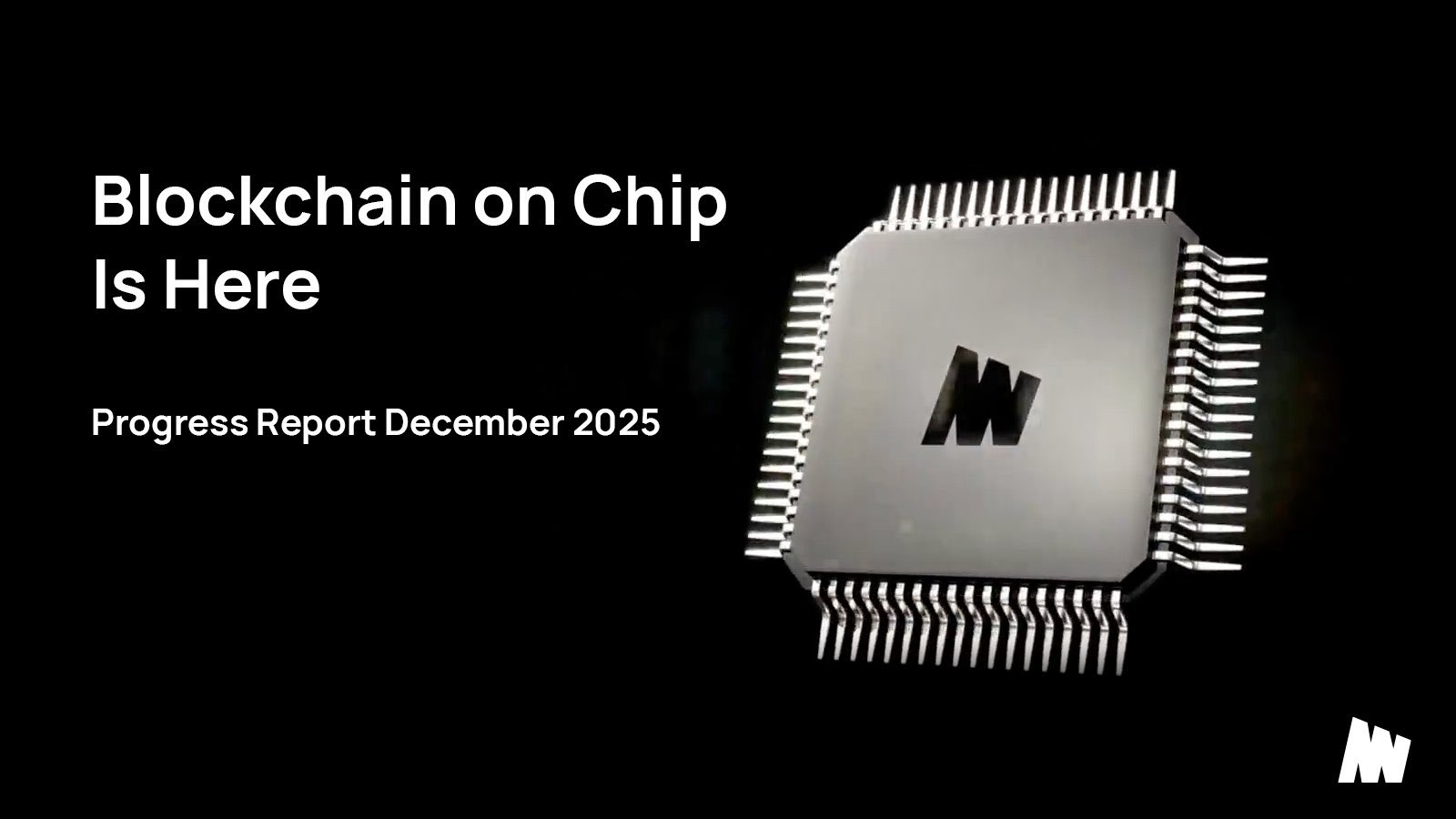
Minima successfully integrates blockchain directly into embedded hardware, achieving chip‑level decentralisation and empowering autonomous systems.
For a long time, blockchain has been described as something machines would eventually rely on.
In reality, it stayed far away from them.
Most systems still depend on cloud infrastructure and external services to handle trust, verification, and coordination.
That setup is fine until you start talking about autonomous machines.
When a system has to make decisions in real time, sending data elsewhere to be verified doesn’t make sense.
Latency matters. Reliability matters.
And relying on infrastructure the machine doesn’t control defeats the point of autonomy in the first place.
What @Minima_Global has done is remove that separation.
Instead of running blockchain somewhere else and letting machines connect to it, Minima runs directly inside embedded hardware.
The node isn’t external. It lives where the machine lives.
This wasn’t achieved by trimming down an existing blockchain.
It required building for embedded environments from the start.
Deterministic behaviour, predictable resource usage, and software that fits naturally into systems built around Arm processors and real-time control.
Minima is already running on embedded Arm platforms, integrated into autonomous hardware,
with cryptographic operations handled directly in silicon rather than left entirely to software.
That changes how trust works.
Validation no longer happens somewhere else.
It happens at the same point where data is generated and actions are taken.
Logs don’t get sent off to be recorded later. They’re created locally, in real time.
This is the difference between a machine that interacts with a blockchain and a machine that actually runs one.
For years, decentralisation has been discussed as a network problem.
What Minima shows is that it can also be a hardware decision.
Once blockchain lives inside machines, it stops being an add‑on. It becomes part of how autonomous systems are built.
That’s the foundation Minima has put in place.
 56
27
203
56
27
203
2026-01-05 05:37
Tendance de MINIMA après le lancement
Extrêmement haussier
Minima successfully integrates blockchain directly into embedded hardware, achieving chip‑level decentralisation and empowering autonomous systems.

🌸Eri ~ Carpe Diem
FA_Analyst
Researcher
C
290.1K @sentosumosaba Extrêmement haussier
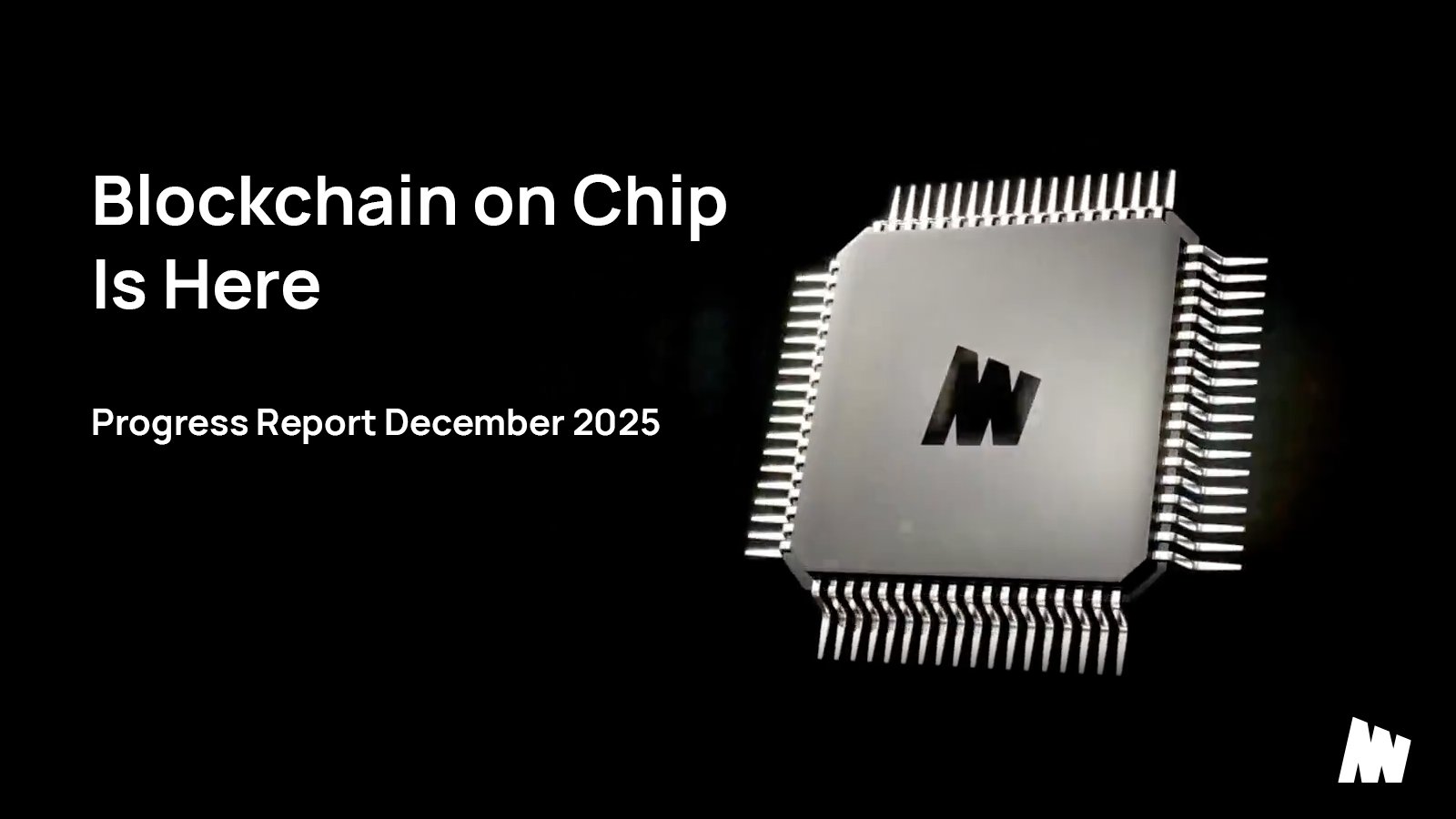
Minima achieves L1 node operation on embedded hardware, realizing a chip blockchain.
Congratulations 👏
This is not a concept or a speculative roadmap. It is working now. https://t.co/mkODRNIxZi

Minima D
39.5K @Minima_Global Minima has reached a milestone the blockchain industry has discussed for more than a decade, but never truly delivered: a fully functioning Layer-1 blockchain node running directly on embedded hardware, without reliance on cloud infrastructure, heavyweight runtimes, or specialised servers.
Today, Minima runs on the Arm processor subsystem inside an FPGA board, with custom cryptographic accelerators. Minima’s deterministic architecture, combined with a purpose-built C++ code, positions Minima as the first blockchain genuinely engineered to live inside autonomous machines, not merely alongside them.
This is not a concept or a speculative roadmap. It is working now.
Read on for the overview, or over this link for the full update: https://t.co/ndEkj5wy0o
 45
6
7.9K
45
6
7.9K
2025-12-15 19:06
Tendance de MINIMA après le lancement
Extrêmement haussier
Minima achieves L1 node operation on embedded hardware, realizing a chip blockchain.
Prévision de prix
Quel est le meilleur moment pour acheter MINIMA? Dois-je acheter ou vendre MINIMA maintenant ?
Pour déterminer s'il est opportun d'acheter ou de vendre Minima (MINIMA), il est important de commencer par s'aligner sur sa propre stratégie de trading et son profil de risque. Les investisseurs à long terme et les traders à court terme interprètent souvent les conditions du marché différemment, votre décision doit donc refléter votre approche personnelle. Selon la dernière analyse technique MINIMA de 4 heures, le signal de trading actuel est Acheter.

Prédiction de Beacon
Prévision probabiliste des prix (Prochaines 24 heures)Avertissement de prédiction de Beacon
Les résultats affichés sur cette page sont analysés sur la base des données de trading réelles (OHLCV) de la paire de trading sélectionnée ainsi que des indicateurs techniques correspondants.
Cette prédiction est un produit technique expérimental et est fournie uniquement à titre de référence. Ceci ne constitue pas un conseil en investissement. Des événements inattendus du monde réel peuvent avoir un impact significatif sur le comportement du marché. Les traders doivent prendre des décisions avec prudence.
Cette prédiction est un produit technique expérimental et est fournie uniquement à titre de référence. Ceci ne constitue pas un conseil en investissement. Des événements inattendus du monde réel peuvent avoir un impact significatif sur le comportement du marché. Les traders doivent prendre des décisions avec prudence.
À propos Minima
Minima (MINIMA) is a cryptocurrency launched in 2024. Minima has a current supply of 999,978,154 with 553,366,920 in circulation. The last known price of Minima is 0.00565818 USD and is up 4.22 over the last 24 hours. It is currently trading on 3 active market(s) with $28,568.09 traded over the last 24 hours. More information can be found at https://www.minima.global/.
En savoir plus
Acheter MINIMA
Trader MINIMA